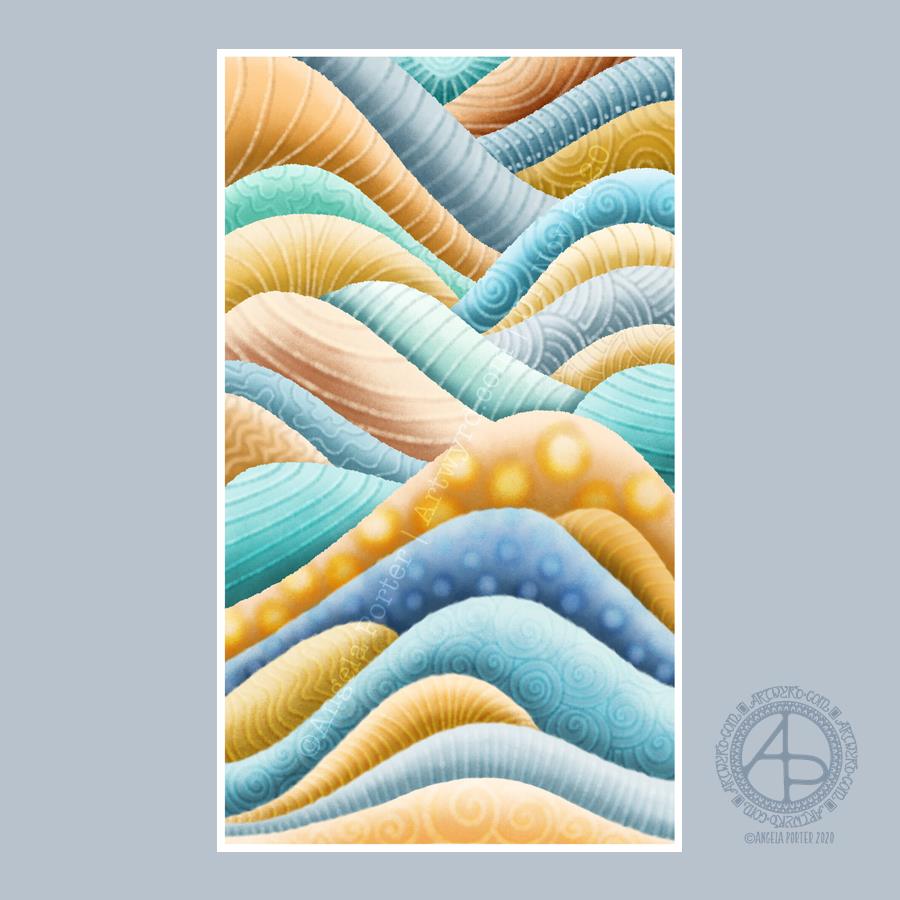
This was a lovely way to spend the first three hours or so of Sunday morning. Abstract digital painting. Chilled out music playing on Spotify. A slow sunrise behind the grey, rain-dropping clouds.
Again, the pattern was inspired by rocks and geology. Some of the patterns I’ve added remind me of rocks and shells, others are a bit too geometric.
It’s always nice to play around with pattern, texture and colour. And when I limit my palette to just a couple of colour families I get much better results. Today, I used the B and YR Copic colour families from the Copic palette included with Autodesk Sketchbook Pro.
While not reminiscent of rocks, the colours remind me of sea and sand. This year, I’ve not been able to get to the coast, other than once way back in February. The colour choice is a subconscious desire for the sea and shore, a liminal place, a boundary between one element and another.
The coast is a place where I feel my whole body exhale and relax. Sadly, it’s not possible to visit at this time, maybe not for a long while. However, the pandemic won’t last forever and the coastline will still be there.
Anyways, creating this artwork was a lovely way of spending some time on a Sunday morning. I can see where I’ve been clumsy with the patterns, making the layers look flatter than I wanted them to.
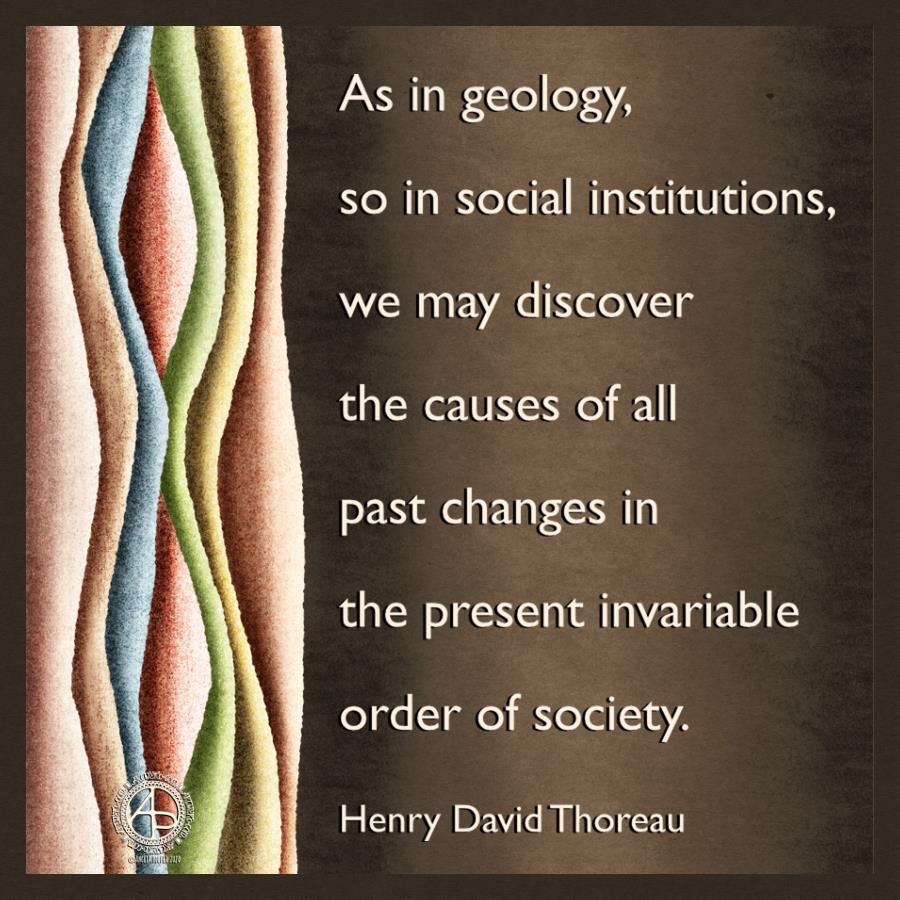
I had so much fun making an abstract design based on strata yesterday, I thought I’d do another today, this time adding a quote.
I’m not so sure I’ve done a good job on either the typography, the background or the artwork. I may have too much contrast, but also shrinking the size of the image for posting to social media along with the games WordPress plays with colours has affected how it looks here.
No matter, I enjoyed the process of creation, so that’s all that matters. It’s all about experimenting, trying things out.
It was a quick bit of art as I was up early for my weekly organic food delivery, to find it was already delivered. So, after breakfast, I went back to bed.
I have other things that I need to focus on today, so a quick project was in order.
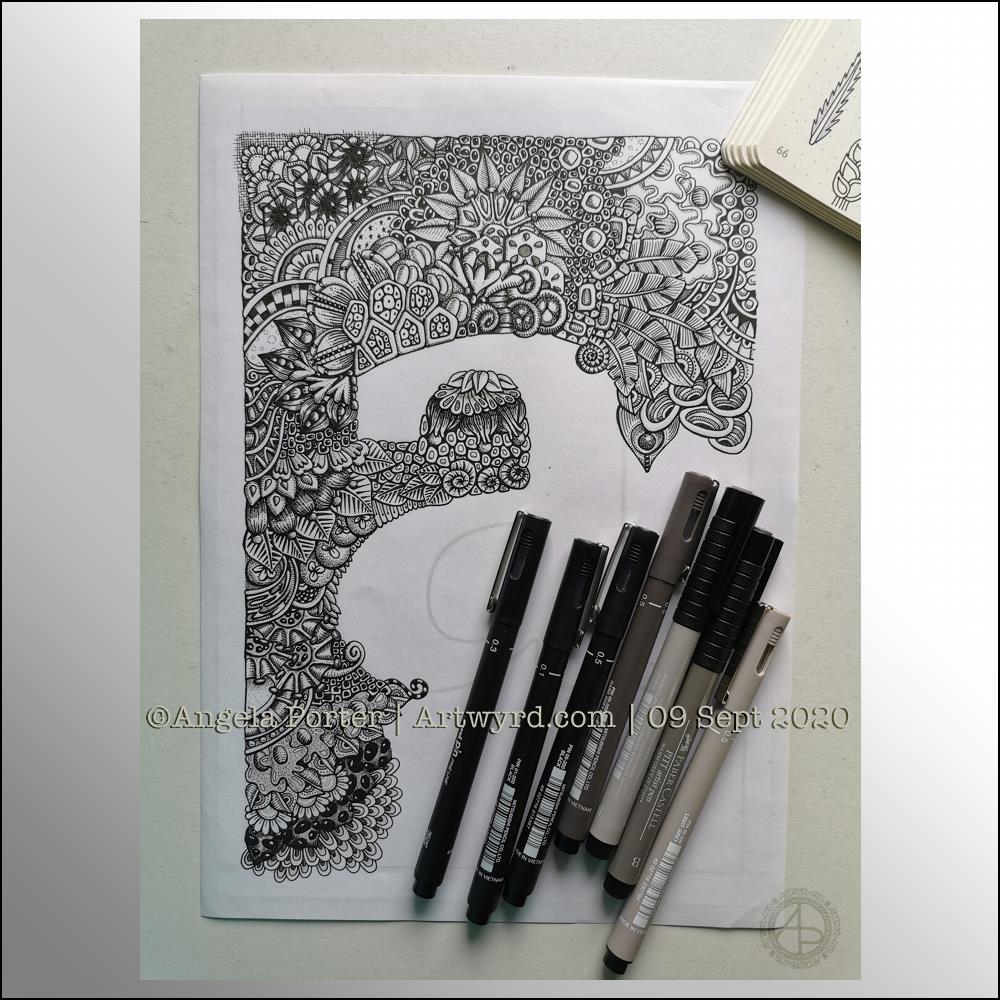
Wednesday is work in progress (WIP) day. So, I thought I’d share my monogram “a” and the progress I’m making on it.
There’s a clutch of pens there! I decided to see if I could add grey to heop areas of the design stand out more, as well as adding some depth and dimension. I figured I had nowt to lose if I tried as the the design was becoming all much of a muchness to my eye. Looking at the image above, it seems to be working well in some areas!
I started using some grey unipin pens to add shades of grey to the design. They worked kind of well enough, but they were picking up pigment from the black and moving it around.
So, I thought I’d see what greys in Pitt Artist Brush pens I had and found some warm greys. They worked better as the colour could be laid down more smoothly.
I do have some new motifs to add to my visual dictionary, a corner of which you can see at the top right of the photo.
I’m not sure if I like adding the greys more than if I don’t add them. I suspect I’ll like them more as I work with them as I love the sense of volume that has appeared in various areas thanks to the contrast they confer on the design.
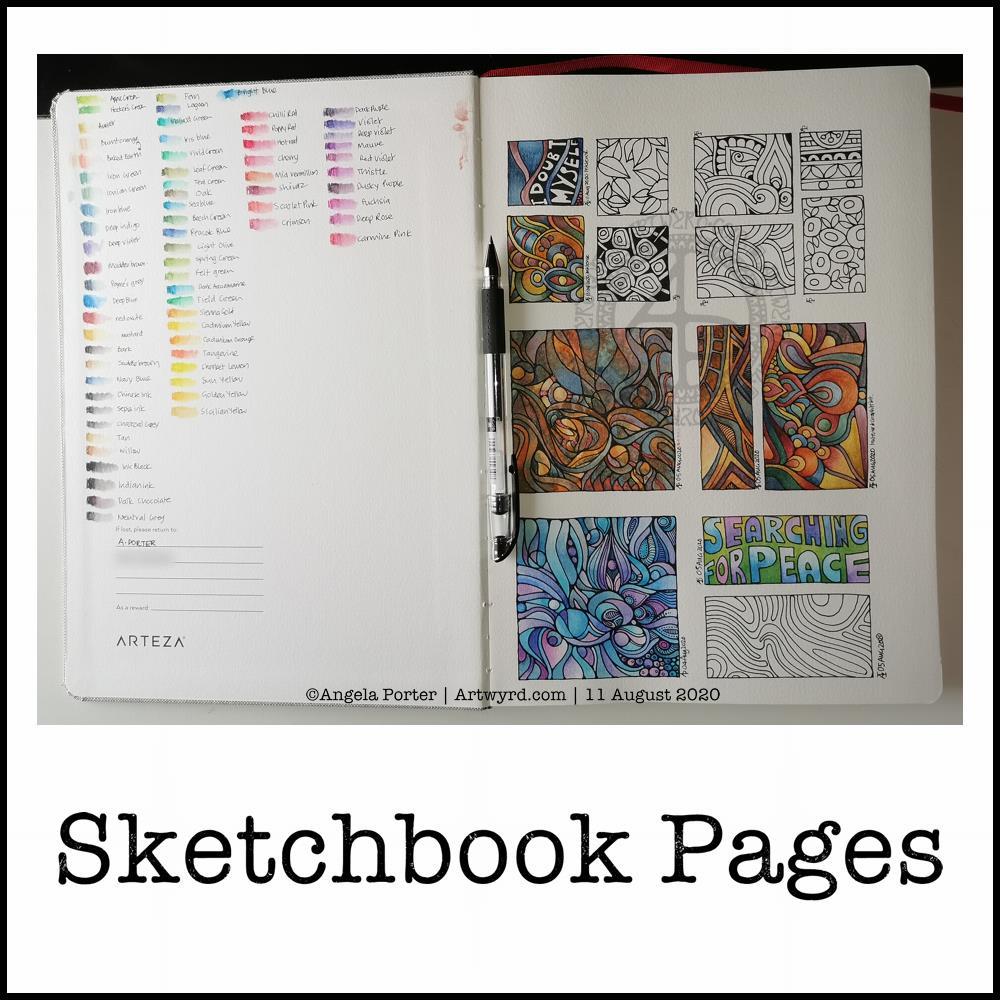
Today, I share a glimpse into my current sketchbook. It’s an Arteza watercolour A4 sketchbook.
I’ve completed all the drawings in boxes now, and am adding colour to them using watercolours, graphitint watercolours, graphitint pencils and/or inktense pencils.
The paper is rather nice to draw on with Faber-Castell Pitt artist pens or a Uniball Signo DX 0.38 pen.
On the cover page I swatched my collection of Inktense pencils, using a damp brush to bring their true colours out.
Inktense pencils are intense in colour when activated with water. Also, once activated with water and dry they are permanent.
I like all the media I’ve used so far on this page. Which I use does depend on my mood. Today, I wanted to choose an inktense palette of colours that is like the rusty colours I’ve been using with watercolours.
I really am drawn to this colour palette in my work at the moment. The dark blues, rich red-browns, blue-greys, earthy-dark greens and the vibrant mustards. One day I’ll look up the psychology of these colours and see how they relate to my mood/life at this time. But not today.
Today, I need to focus on adding colour to some templates for the Entangled Gardens colouring book that will be released early next year.
This morning was a morning that I needed to do some art that was familiar, calming, soothing and intricate enough that I could lose myself in it. A mandala always fits that bill. Always. It doesn’t matter if it’s drawn with pen and ink on paper or digitally. The mindful, calming effect is the same. It’s the process that matters, the repetitive shapes and patterns that are drawn that contribute greatly to the soothing effect.
I do tend to gravitate towards digital art, and I find the symmetry tool in Autodesk Sketchbook Pro helps to save a lot of time. The ability to erase ink removes the frustration that a mistake creates for the hyperperfectionist part of me.
Other than those time-saving (and frustration-saving) tools, the process of mandala drawing is the same for me.
It starts by using a compass, protractor and ruler to set out the circular grid. Then, it’s digital pen on screen to draw the mandala in exactly the same way as I would on paper, just without so much repetition of sections.
However this was created, it has served it’s purpose – given me some time and space for inner peace and contentment.
7″ x 2″, St Cuthbert’s Mill Bockingford watercolour paper, White Nights watercolours and a Faber-Castell Pitt Artist pen.
Abstract patterns, bright, almost 1960s psychedelic colours and a small project that doesn’t overwhelm me are what I need today. I’m feeling under the weather, and bright cheery colours and a simple project are what I needed to do.
Yesterday, I spent some time adding colour to paper to add to my custom sketchbook. This is one of the papers that I created, with an abstract drawing on it, that is finished enough for the sketchbook.
The artwork measures approx 4″ x 6½”. I used a piece of ClaireFontaine Paint-on mixed media paper which I coloured with Distress Oxide Inks followed by some sprays and splatters of water to create a distressed look. The colours used were Seedless Preserves and Fossilised Amber.
I first drew the basic outline of the design with a M Pitt Artist pen from Faber-Castell. To add colour to the design, I used Distress Inks in Seedless Preserves, Fossilised Amber and Ripe Persimmon like watercolours.
Then, I started to add patterns, lines and stippling to the design to bring out the patterns and add depth, interest and dimension.
I think it’s worked out fairly well. I may well go back to yesterday’s ‘Blessings’ artwork and add colour and more patterns to it at a later date.
I went out!
My blog post is a little later as I decided to go out for a walk this morning. This was a big deal for me. Especially after the effects of the high anxiety/stress I experienced last week.
I went to my local cemetery, Glyntaff Crematorium. It’s fairly large, with lots of paths and roads sectioning the cemetery up. I wandered around the older section, which is full of fascinating funereal sculpture. I had my DSLR camera with me, and managed to take over 100 photos this morning, not just of gravestones, but textures too.
It was so nice to be out in fresh air, moving my body around more than I have done for nearly four months. I had nice music on earphones so that any loud sounds wouldn’t startle me. There was work going on around the crematorium as well as grounds work.
It was also nice to drive my car again. It’s been a week, and I really miss the freedom of just being able to take a drive. It’s important that we still stay home as much as possible and to limit our time where there are people. I think my choice to visit the cemetery was a good one. Very few people, alive or dead, haunt cemeteries!
I think I fall into the group of people known as tapophiles – people who are interested in cemeteries, gravestones and funerals. It’s not a morbid interest, just an interest about the changing styles of funerals, funerary sculpture , practices and how they change over time with society and culture.
I discovered the fascination with gravestones when I walked to and from school through this cemetery. It took me longer to get home than it did to get to school. On the way home I had the time to linger and explore and indulge my curiosity. I remember being too scared to look in the chapels there, but enjoyed popping into the columbarium, which has recently been renovated and reopened.
I think I’ll be looking for other cemeteries fairly local to me to visit in the weeks ahead, ones that offer me a good walk as well as interesting graves to look at.
Wibbly-wobbly sculptural columns and arches surrounded by layers and layers of abstract bubbles, ripples and swirls of thoughts, wishes, blessings. Well, that’s what came to my mind as I added the architectural details.
No highlights, no sparkle, limited pattern and texture. Just flowing line work, for the most part. I’ve even left some ‘white space’ in the design, which is becoming less unusual for me.
Rounded arches with patterns reminiscent of Romanesque architecture. The columns are, however, more delicate, which is more reminiscent of the move towards Gothic architecture. Both forms or architecture have long been a source of artistic inspiration for me.
Soothing, relaxing and meditative to draw. Circles and spirals, arches and patterns are always comforting and endlessly fascinating to me.
Drawn using Faber-Castell Pitt artist pens on paper coloured by PaperArtsy Fresco paints. The drawing is approx. 2½” x 6¾”.
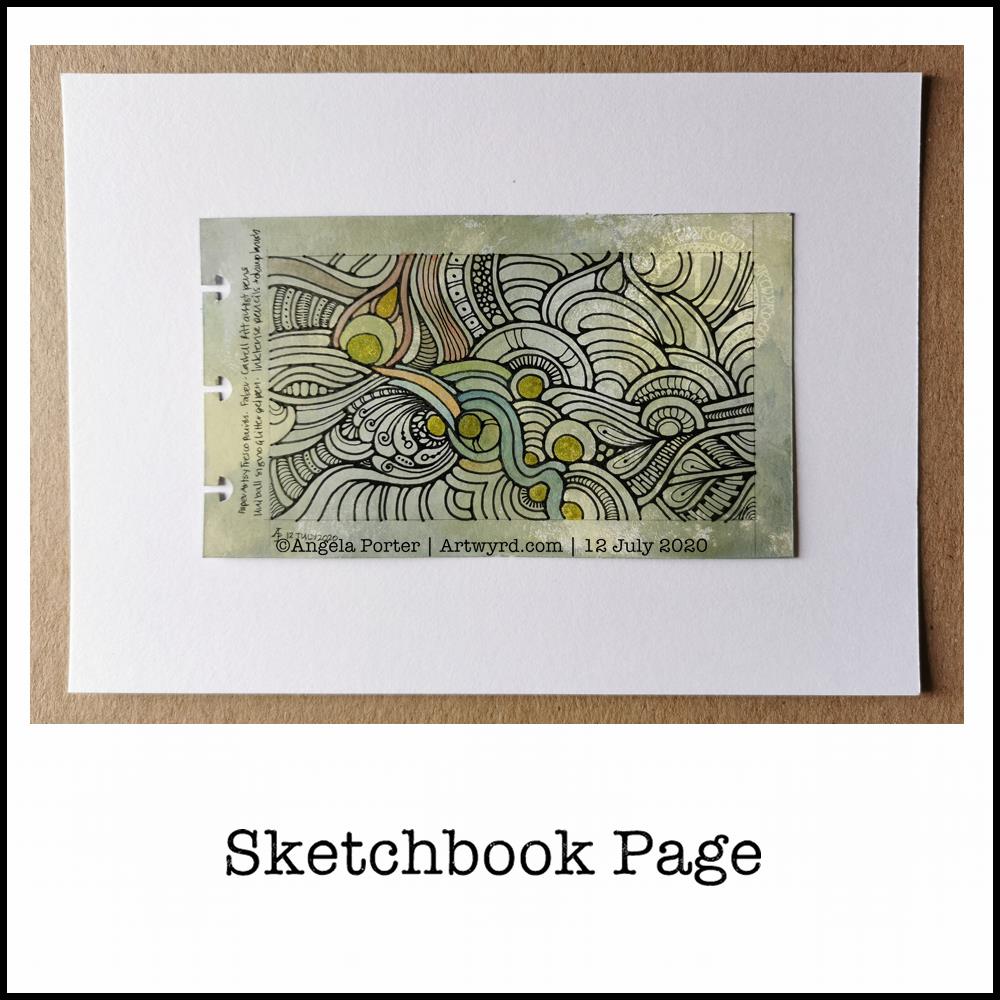
I used a variety of PaperArtsy Fresco paints to colour a 5¾” x 3⅜” piece of ClaireFontaine Paint-On mixed media paper. I chose, for me, an unusual mixture of colours. It’s ended up looking like old, distressed and grungy painted walls.
Next, I drew the abstract design with Faber-Castell Pitt Artist pens. I did the basic outlines, leaving my decision whether or not to add details for later on.
Then, I tried adding some colour to the background with Inktense Pencils and a damp brush. As this is a sketchbook page, I tried different colours out to see which ones would work well with the background. The finish on the Inktense-d areas was rather chalky and dull, though a subtle colour was achieved on the acrylic paint background. I’m not sure if I like it or not.
I find it difficult to resist a bit of shimmer and shine on my art, so I used a Uniball Signo gold glitter gel pen to fill in some of the circles in the design.
Finally, I added some more complex patterns to some areas in the design. I could’ve filled in more areas, but I’ve decided that this is enough.
Other stuff…
This wasn’t the only piece of paper I coloured with the Fresco paints. As they’re for the sketchbook, I coloured each piece on both sides. So, I now have quite a few prepared pages in my custom sketchbook to draw on as time goes by.
I think I’ve finally settled down after the trip out on Tuesday. I seem to be more settled, for sure. Meditation, self-care, self-soothing and enough rest has worked it’s magic once again. Sunshine today is helping as well, along with the refreshing breeze that is gently flowing in through the windows.
The simple things in life are often the ones that bring most peace to me – art, meditation, quiet times, sunshine.
Last weekend, I made a small sketchbook that would hold approx 4″ x 4″ pieces of paper that was held together by book binding rings. I thought this would be a good idea as I like to work on small pieces of paper.
Then, last night I tried taking some prints from alcohol ink designs on A5 paper. I really didn’t want to cut them up to fit into the smaller custom sketchbook. I also didn’t want to use the metal binding rings again.
I woke this morning with the idea to use a disc binding system to create a custom sketchbook-come-art-journal.
I have been using an A5 Arteza mixed-media sketchbook for this, but it has rapidly become very, very wedge-shaped. I also realised that I want something where I can add a variety of sizes and types of paper, as well as move them around to suit my needs. A disc bound system seems to be the best way for me to do this.
I’ve yet to work out a way to make a hard cover for the sketchbook. For now, I made each cover from two sheets of A4 pearlescent card glued together. They’ll be sturdy enough until I work out how to reinforce them in some way.
I decided to place the disc binding on the landscape edge, just for a bit of a change, no other reason. I’ll be able to take the paper out of the binding to work on. This actually suits me just fine as the spines of sketchbooks really irk me when I work in them, be they sewn or spiral bound.
What I also like about the disc binding system compared to the book binding ring is that the holes in the paper are much closer to the edge. It’ll be much easier to leave a ‘margin’ on the paper.
Of course, there’ll be plenty of times when I’ll work in a commercially produced sketchbook still, especially as I’ve now rediscovered the joy of using one again. However, the ability to colour paper, use different kinds of paper and sizes of paper really appeals to me as a variation on the sketchbook theme.
The different sizes of papers also add a bit of intrigue to the sketchbook. There are glimpses of other designs and backgrounds further on that add to curiosity.
I can choose to add notes either to the back of the work or on sheets of dot-grid or squared paper I’ve added.
Nor am I precluded from adding journaling elements such as envelopes and pages with pockets, for instance.
Abstract art
The top page is an abstract drawing I completed this morning. The colour and pattern on the paper (a piece of ClaireFontaine Paint-On mixed media paper) was added by taking a print from alcohol inks on Yupo paper.
I spent some time yesterday evening experimenting with alcohol inks on Yupo paper (a synthetic paper). Once I was happy with what I’d made, I added some Alcohol Lift-Ink and used a brayer to spread it over the design. Quickly, I placed a sheet of mixed-media paper on top and allowed the alcohol inks to be transferred. If you’d like to know more about this technique, pop over to the Lavinia Stamps YouTube channel; they have lots of videos showing how this is done.
The inks lose their vibrance and become more muted when this is done, but it means it’s much easier to draw on the design without wrecking pens in the process.
I used Pitt Artist Pens by Faber-Castell to draw the abstract design on the paper. Once I was happy with the design, I added some metallic/pearlescent paints in shades of orange and yellow to some of the white/pale circles in the design. Sadly, the photograph hasn’t picked this up.
I decided to not to cover the whole paper with the drawn design. I wanted to leave some areas of the background as they were.
I really enjoy working like this – creating a colourful, textured background which I then use as inspiration for the line-work. It is, for me, a very meditative process. Of course, patterns and forms appear that I can then use in future artwork.
Of course, I could choose to intensify the colours in select places using any variety of media. Today, I have chosen to leave this as it is. I may scan it in and try this out digitally at another time.
Digital or Traditional Art?
Both! For me anyway. I do love working in both ways, and using them in concert too.
I love the portability and smaller scale of paper and pen/pencil, as well as using other traditional art and craft media.
I also love creating art digitally, sometimes using backgrounds I’ve created using traditional media or pen and ink drawings.
Each has their pros and cons. Each allows me to do things that the other can’t.
One thing I do know, however, is it takes time to become skillful in each and also to find your own artistic voice (or voices) for each medium used.
Which I use at any given time depends on the style of art I need to do, what kind of ‘finish’ I want with it, and also what my arty heart and soul requires at the time to be content and happy.
No matter which I use, I’m constantly trying new things out, or revisiting old techniques with fresh eyes and ideas. Of course, changing media and methods also freshens up my art and recharges my motivation when it’s in ebb rather than flow.
Stress, motivation and inspiration
This week has been dominated by stress from venturing forth from my home for the first time since March. When I’m anxious/stressed it can be incredibly difficult to settle to anything. Also, I can easily feel overwhelmed by even the simplest tasks. Activities that usually soothe me can irritate me. My ability to focus on anything approaches a vanishing point rather rapidly.
Working in a sketchbook has helped; there is then no pressure to create a finished piece of work, or even to finish any sketch or artwork. It’s just about doing and enjoying and exploring. I let go of my expectations of artistic success and replace them with expectations of finding some peace and contentment in the whirl of emotions I experience at times like this.
I find it hard to be motivated to create, and even more difficult to find inspiration. I tend to slip back into old, familiar and self-comforting styles of creating art.
Hence this style of abstract art.
Even when I do slip into a familiar style, the art produced may be familiar, but it’s moved along, altered either subtly or more noticeably showing the progress I’m making artistically. It also reflects the current variations in the particular fugue that my artistic voice wants to sing to satisfy it. My artistic voice, song, doesn’t have one tune, it has many, plenty of which are yet to be discovered.







 Art is the Adventure