Mistletoe and Ivy

Well, as I’d done some notes about holly previously I thought it would be a good idea to complete the trio of plants most associated with Yuletide/Christmas/Winter festivities.

Mistletoe (Viscum album)

Early antiquaries thought all types of Christmas foliage came from that used by the Romans at Saturnalia, which was a festival that originated in Greece.  However, once mistletoe became especially popular, the more picturesque theory of Druidic origin gained ground.  Pliny the Elder (AD 23-79) recorded the following about mistletoe:

The Druids hold nothing more sacred than mistletoe and a tree on which it is growing, provided it is Valonia oak … Mistletoe is, however, rather seldom found on Valonia oak, and when it is discovered it is gathered with great ceremony, and particularly on the sixth day of the Moon (for which these [Gallic] trips constitutes the beginning of the months and years) … Hailing the Moon in a native word that means ‘healing all things’, they prepare a ritual sacrifice and banquet beneath a tree and bring up two white bulls, whose horns are bound for the first time on this occasion.  A priest arrayed in white vestments climbs the tree and with a golden sickle cuts down the mistletoe, which is caught in a white cloak.  Then finally they kill the victims, praying to God to render his gift propitious to those on whom he has bestowed it.  They believe that mistletoe given in drink will impart fertility to any animal that is barren, and that it is an antidote for all poisons.

Steve Roud in ‘Oxford Dictionary of Plant-lore’ comments that ‘largely as a result of this passage, more nonsense has been written about mistletoe than any other British plant’.  It is responsible for more disinformation in British folklore than almost any other.   Whatever its merits in itself, it has been repeated over and over and has been used for many flights of fancy about Druids and the ancient origins of our customs and beliefs.

Because of its Druid and pagan associations, mistletoe is traditionally banned from churches, according to the very influential John Brand in 1849.  However, recent research has shown he was wrong, at least for some regions such as Staffordshire where churchwardens’ accounts record repeated purchases of mistletoe.  In 1648 is first listed among the many evergreens decking churches and homes at Christmas by Herrick in Hesperides, no 893.   From the Middle Ages on, the use of holly and ivy in this way has been well recorded.

Mistletoe became important in the late 18th century as part, and soon to be the most valued part, of the elaborate kissing boughs/bushes that were hung up in farmhouses and kitchens, of which kissing under the mistletoe was first recorded in 1813.  There were rules as to when it must be taken down, which varied regionally.  Why mistletoe was included was never recorded, and why kissing beneath it became popular is never fully explained, though it is commonly attributed to it being a Druidic/pagan fertility plant.  This has been stated again and again that it has become ‘The Truth’ as opposed to ‘the truth’.

‘Pliny was writing about the Gauls, not the Brits.  We do now know where or from whom he got his information about the Druids.  Classical authors, however reliable they may be in other respects, are at their most unreliable when describing foreign people, their lands and their beliefs.  There is no hint anywhere else to support Pliny’s report.  There is no other mention of the sacred nature of mistletoe in Britain until antiquarians began reading and believing Pliny’s report some 1500 years later.  Even if Pliny’s report was accurate, there is no evidence that the practice was continued into historical times or had any influence on later lore.  Modern mistletoe beliefs are reported almost exclusively from England, and not the Celtic areas where was are told the Druidic traditions continue to have resonance.’ (4)

Nordic Mistletoe Myths

There may be a link to ancient Nordic myths too.  Mistletoe, apparently, was the plant of peace in Scandinavian countries and if enemies met beneath it, they would lay their arms down and keep a truce until the next day.  Perhaps it was this ancient Norse custom that led to the one of kissing beneath the mistletoe?

This tradition, however, went hand in hand with the story of  the death and resurrection of Baldur, one of the most intriguing of the Norse myths, and perhaps it is this that is the start of the tradition of mistletoe as a ‘kissing plant’.

Baldur’s mother was the Norse goddess, Frigga. When Baldur was born, Frigga made each and every plant, animal and inanimate object promise not to harm Baldur.  However, Frigga overlooked the mistletoe plant — and the mischievous god of the Norse myths, Loki, took advantage of this.  Always the prankster, Loki tricked one of the other gods into killing Baldur with a spear made from mistletoe.  This god was Hoder, who was Baldur’s blind brother.  Loki guided Hoder’s hand, and Baldur’s heart was pierced by the spear.  The death of Baldur, a vegetation deity in the Norse myths, brought winter to the world, although the gods did eventually restore Baldur to life, but not before Frigga’s tears had become the white berries of the mistletoe.   After this, Frigga pronounced the mistletoe sacred, ordering that from now on it should bring love rather than death into the world.  Happily complying with Frigga’s wishes, any two people passing under the plant from now on would celebrate Baldur’s resurrection by kissing under the mistletoe.Mistletoe etymology

While the romantic traditions woven around mistletoe give us a feeling that the plant is all dreamy and lovey-dovey, it’s interesting to ponder the etymology of ‘mistletoe’.  The second century Anglo-Saxon name for it was misteltan, with  mistel meaning dung and tan meaning twig.  It was believed at that time that the plant grew directly from the birds’ dung rather than the seed that passed through its digestive system.

Kissing and love

  • When a kiss is exchanged beneath the mistletoe, a berry should be removed.  Once all the berries have gone, no more kissing that year!
  • If an unmarried woman is not kissed beneath the mistletoe, she will not marry in the coming year.
  • If a couple in love kiss under the mistletoe, it is considered a promise to marry.

After Christmas is over …

  • Mistletoe should always be kept until the Christmas following.  It is believed around the Chudleigh district that it will stop the house from being struck by lightning.  At Ottery they say it will ensure that the house will never be without bread.
  • A piece of mistletoe must be kept to be burned under the Shrove Tuesday pancakes.
  • A piece of mistletoe must be kept from one year to the next because while mistletoe stays in the house love also stays.
  • A sprig kept hanging on the beam until next Christmas will keep the witches out/keep evil spirits way/goblins away.

My own mistletoe tradition

I must admit that I keep a bunch of mistletoe hanging in my front room at home.  I change it, usually, on the Winter Solstice, burning the old out doors.  I use a blowtorch to set fire to the old bunch and it burns fantastically well!  I make sure I stand upwind of the fumes too.

Why do I do this?  Well, it’s become a tradition for me at this time of year.  It symbolises the protection around my home that exists to keep bad away – maybe not ghosties and ghoulies and things that go bump in the night, but to keep people of ill intent out, to neutralise any ill intent sent my way, to create an environment of peace and harmony and love.  It seems to work … perhaps simply because it is a physical symbol of my intent to have such an environment around me, a safe environment to retire to when the world outside is just too much to cope with and I need quiet time to rest and recuperate.  Burning the old symbolises letting go of the past years’ troubles and worries and upsets and so on, and the fire purifies the darker elements that the mistletoe has symbolically soaked up, returning them to the light.

Whether you believe it or not, it works for me!

Ivy (Hedera helix)

Considered by some to be unlucky to have in the house at any time other than Christmas.

Ivy leaves formed the poets crown in ancient times, as well as the wreath of Bacchus, to whom the plant was dedicated most probably because leaves of ivy were bound around the forehead to prevent intoxication.

    Greek priests presented a wreath of ivy to newly-weds as a symbol of fidelity.

      English taverns used to display a sign of an ivy bush over their doors to advertise the excellence of the liquor served within – ‘Good wine needs no bush’.

        References

        1. Steve Roud, ‘Oxford Dictionary of Plant-lore’
        2. Jacqueline Simpson and Steve Roud, ‘ A Dictionary of English Folklore’
        3. Ronald Hutton ‘The Stations of the Sun’
        4. Steve Roud, ‘Penguin Guide to the Superstitions of Britain and Ireland’
        5. The Mistletoe Pages
        6. Norse Myths and Mistletoe at About.com
        7. The Truth vs. the truth – an old Wyrdsmithing blog engry
        8. BBC’s h2g2 website

        Winter Solstice 2010

        All the very best of the Winter Solstice greetings and wishes to all!

        The exact point of Solstice is at 23:38 UTC, which is when the Sun enters Capricorn.   In the Northern Hemisphere, this marks the longest night and also the gradual returning of light to the world as the days gradually lengthen once again.

        What makes this year’s Winter Solstice extra special is that there is a Lunar Eclipse fall on the same day, for the first time since 1638.  Sadly, it was not possible for me to view the Lunar eclipse as the skies were cloudy here, and no doubt the hills would have obscured my view of the Moon in any case.

        In my immediate environment, in the Northern Hemisphere, nature is in it’s annual dormancy and the return of the light from this day on is a reason enough to celebrate the continuation of nature’s seasonal cycle.  With the snow still covering the ground, life having slowed down due to the freeze here in the UK, there’s an even bigger sense of the big sleep of nature.

        The Winter Solstice had, no doubt, great significance to prehistoric people, no doubt linked to the uncertainty of seeing life through the harsh winter months.  Evidence for this remains in the apparent alignments of Neolithic and Bronze Age sites such as Stonehenge (Winter Solstice 2010 at Stonehenge) in England and Newgrange (Winter Solstice at Newgrange 2010) in Ireland to astronomical events such as the Winter Solstice.  The lives of these people depended very much upon the seasons and weather and it must have been important for them to mark the cycles of the seasons in some way, just as we do still.

        The Feast of Yule was a pre-Christian festival observed in Scandinavia.  At this time of year, fires were lit to symbolise the heat, light and life-giving properties of the returning Sun.  A Yule log was brought in and burned in the hearth in honour of the god Thor.  A piece of the log was kept to act as both a good luck token for the year and to act as kindling from which the next year’s Yule log was lit.  Ashes from the log were also collected to be spread on the fields to ensure a good harvest that year.

        There are many festivals coinciding with the Winter Solstice around the world, as can be easily read about on the web – see for instance Wikipedia.

        How will I be spending the day?  Well, not as I would in years past.  Normally, I’d replace my bundle of mistletoe at dawn, burning last year’s old bunch.   This will have to wait for a day or two until I can get out and about!   The mistletoe hung in the home acts as a protection against negative thoughts and deeds.  Burning it releases and purifies that which it has absorbed over the year.  Part of the day will be spent in meditation/quiet thought/reflection on the past year and particularly upon the progress I have made in achieving goals in life and giving thanks for all those people and circumstances which have aided me in my progress, whether they realised it or not, and whether I realised it or not at the time! Sometimes, the people and situations that vex us most are responsible for the greatest progress in our personal development.

        How will you spend the day?

        1. Guardian – Article about the coincidence of Solstice and the Lunar Eclipse
        2. National Geographic – Article about the coincidence of the Solstice and the Lunar Eclipse
        3. Winter Solstice at Time and Date.com
        4. December Solstice Traditions at Time and Date.com
        5. Winter Solstice on Wikipedia
        6. Yule on the BBC website

        Holly

        English Holly (Ilex aquifolium)

        Holly © Angela Porter 19 Dec 2010

        Etymology

        The word holly comes from the Old English ‘holegn‘ which became the Middle English ‘holin‘, which Tolkien fans will recognise – Hollin was the name among men for the land of Elves that thrived to the west of the Mines of Moria, known as Eregion, and it was famous for its holly trees.

        In Welsh holly is called celyn.  In Terry Pratchett’s ‘Soul Music’, Imp Y Celyn is the lead singer of The Band With Rocks In

        Folk names for holly hulver bush, holm, hulm, holme chase, holy tree and Christ’s thorn.

        Holly decorations

        Holly is one of the most striking objects in the winter woodland with its glossy leaves and clusters of brilliant scarlet berries. It is very much connected with Christmas in many Western cultures. From very early days, it was gathered in great quantities for Yuletide decorations, both of the church and the home. The old Christmas Carols are full of references to holly.

        Christmas decorations are said to derive from a Roman custom that involved sending gifts to their friends during the festival of Saturnalia which occurred in mid-December. Strenae, twigs of holly or laurel with sweets fastened to them, were a popular gift. Boughs of holly and other evergreens were also used as decorations. Evergreens are symbolic, of course, of enduring and renewed life as well as a way to encourage the return of vegetation at the end of Winter.

        The Christians were quick to adopt holly for their own celebrations, with the holly representing the crown of thorns that Jesus wore, the berries symbolising drops of blood. A medieval legend asserts that the holly sprang up from the places where Christ walked, hence the name Christ’s Thorn.

        Old church calendars have Christmas Eve marked ‘templa exornantur‘ (churches are decked), and the custom is as deeply rooted in modern times, whether you celebrate Christmas, Yule, the Unconquered Sun, or the return of the light, as it was in either pagan or early Christian days.

        Childhood memories of ‘trimming up’.

        As a small child, I can remember going to bed on Christmas Eve to an ordinary home.  Generally, we were in bed early –  6pm on a school night, 7pm any other night.  On Christmas Eve, my parents used to keep us up until gone 7pm just to try to get us all to sleep through the night – I am one of six children, the second oldest.  I’d be blamed for everything, including the indecently early hour of waking on Christmas morning.  We’d make our way downstairs, bags of gifts in hand, and we’d be amazed!  The stairwell was lit by twinkling fairy lights.  The front room was sparkly with shimmering tinsel, metallic versions of fancy paper-chains, and the lights, baubles, lametta and tinsel on the tree.

        As a child this was magic!  It was, in many ways, the best part of the day.  We were always told that the the fairies that lived in the central heating did the work of decorating, but as we grew up, we took our places to help the ‘rents decorate, as well as taking part in the toast at 10pm to members of the family past and present.  Even when we were all young adults, the house was never decorated before Christmas Eve, and even when we all had moved away to our own homes we still returned on Christmas Eve to decorate for the ‘rents.  I still believe the rest of the family do so now.

        Holly superstitions

        It is said to be unlucky to cut a branch from a holly tree; it should be pulled off instead.

        Old stories advise people to take holly into their homes to act as a shelter for elves and fairies who could join mortals at this time without causing them harm. However, it must be entirely removed before Imbolc Eve (31st January) as just one leaf left within the house would result in bad luck.

        In Somerset, it was considered unlucky for holly to be brought into the house before Christmas Eve, and then only brought in by a man.

        In Herefordshire and Worcestershire, a small piece of holly which had adorned a church at Christmas time was regarded as very lucky to hang up in your home, even though the domestic decorations had to be burned as usual.

        Pliny tells us that if holly is planted near a house or a farm it would repel poison, deflect lighting and protect from witchcraft.

        Pythagoras noted that the flowers would cause water to freeze and if the wood, if thrown at any animal, would cause the animal to return and lie down by the wood, even if the wood did not touch the animal.

        A good crop of berries on holly is still said to be a sign that a hard winter is on the way.

        Holly uses

        Holly wood is heavy, hard and white-ish and it was used for the white chess pieces, ebony being used for the black.

        In the 1800s, weaving looms had holly wood spinning rods; holly was less likely to snag the threads being woven as it is a very dense wood and can be sanded very smooth.

        Peter Carl Faberge used holly cases for his famous Easter Eggs, as well as small objects such as hand seals.

        Holly is also used for veneering.

        1. www.wikipedia.com
        2. www.botanical.com
        3. homepage.ntlworld.com/blackbirdhollins/articles/Holly%20tree.htm
        4. “English Folklore” J Simpson and S Roud

        Snowbound

        Well, the white stuff has fallen again here in South Wales.  While the world looks pretty, especially in the bright sunshine and pale-blue winter skies, everything seems to have come to a total standstill in the area where I live.  It is actually bliss!

        At the end of what felt like a long, tiring, stressful half-term at school, there is no pressure on me to go out anywhere or do anything other than keep warm, sleep, read, be creative.

        There is no way the car is getting out of the street I live in.  The hill it connects to is impassable.  And it seems to be pretty much the same right the way around the town.  Which means the background noise from traffic and work going on outside is zero.   Another reason why it is bliss!  For the first time in years I can hear the sound of planes overhead, distant birdsong and cawing of the corvids too.  And at night the silence is wonderfully enveloping, sleep deepening.

        So what if it isn’t possible to get the gift shopping done?  My yearly purchase of mistletoe will be later than the Solstice eve methinks.  A meal out on Monday night is very likely to be cancelled.

        Yet all of these things can be completed at a slightly later time.  I may have my own tradition of replacing last year’s mistletoe with new on the morning of the Solstice, but if I’m a little late it won’t matter too much.  The meal can be rearranged.  The shopping can be done at a later time.  I have more time to create the gifts of jewellery that are going to those close to me, though the cufflinks that I wish to create may have to be a belated present if the post doesn’t arrive in time!

        I certainly won’t miss the craziness of the shops at this time of year, the stress I feel in going to such places, and I’ll no doubt feel a lot better as a result.

        A silver lining in the blanket of snow?  Very much so!  Pure platinum rather than silver I think!

        Focusing on the positive

        Being Star Wars-ed?

        Well, now, where to start.  I know, I’m going to Star Wars you!  Here’s a quote from Star Wars Episode 2: Attack of the Clones

        “You’re focusing on the negative, Anakin. Be mindful of your thoughts.” – Obi Wan Kenobi

        Over the past week or two, there have been numerous times when I’ve felt I’ve been in a Star Wars movie, being given advice about The Force.  However, the advice given by a dear friend of mine and my counsellor has been about focusing on the positive, good times and things in my life.   The counselling work has been about rebalancing my view of me and my life.  This has involved condensing the negative perceptions of myself and my reactions and thereby reducing their significance and expanding on the positive perceptions with evidence to support it.  The positive evidence, and focusing on the positive is not an easy thing for me to do.  To acknowledge my successes, my achievements, the times I’ve been praised and gained acclaim, these are times that are easily brushed aside.

        All the same, I have endeavoured to focus on the positive.  I’ve made a concerted effort to write a list of good events, good feedback, things to be grateful for in my offline journal at the end of every day as I sit in bed before sleep.  I do write about problems, confrontations and so on still so that I can reflect on them, work my way through them, and come to a balanced perspective on them, but I have been doing my best to write down a gratitude list.  And even on the murkiest, darkest, trouble-beset days there are things to be grateful for.

        Jedi philosophy, Buddhism, eastern religions … all seem to tie in, don’t they?  I remember seeing the first Star Wars Film – Episode 4, A New Hope.  It was the first time any kind of belief system had struck a chord within me, and though I knew the film was fantasy, the ideas would eventually ignite my own search for my personal brand of spirituality.  And it turns out that things for me aren’t too different from the Force!  Is this worrying?  I think not!

        New phone

        That time had come around again – the renewal of the mobile phone contract with T-mobile.  This time, I opted for a new phone rather than the £10 per month loyalty discount as the price for my tariff had plummeted considerably.  Essentially, the new bill is £20 a month, compared to £26 with the discount or £36 without the discount!  Brill!  And what phone did I get.  Well, the lovely chaps at T-mobile recommended the Motorola Defy to me, seeing as I have no idea about phones, am not interested in fashion statements and the like.  I wanted something that would be durable, easy to use, and they told me I also would want a phone that would let me use my unlimited internet allowance too.

        Well the phone arrived, I was totally bemused for a while, but within a few hours was comfortable with it, and now find it a marvellous thing to have with me!  I certainly won’t get bored when waiting … I must remember to carry my glasses with me as I am getting eye-strain from looking at little letters on a little screen close to me.  Oh the joys of being long-sighted!

        My favourite app so far is Google Sky, which was free for me to download and one of the student teachers at school was most disgusted at that as he’d have to pay to get it on his iPhone!  Result I think!  I also downloaded, amongst other things, a nice meditation timer which I’ve yet to use but is likely to prove useful in the future.  I’ve not got music on the phone yet, but there’s no rush for that either.

        Having said that, the weather reports have been very useful given all the snow and traffic chaos that has ensued.  And it’s been nice to cwtch up nice and warm in bed and email/message friends rather than get drafty-cool sat at the ‘puter.

        So, I march on into a new realm of communication, wondering why it took me so long!

        Snow – bleurgh!

        I’ve already mentioned the snow.  There’s not been too much of it around South Wales, generally, but enough to cause chaos at times with travelling.  The main roads have mostly stayed pretty clear and I’ve found it perfectly fine to get around, though I’ve not been to the higher reaches of the Valleys.

        A bonus has been a couple of days at school with few pupils in.  Small classes, quiet, calm.  It should be like that all the time!  It’s amazing the difference it makes with just 5 or 6 out of each class – the mainstream class sizes then become around 25 to 27.  I’m a lot calmer, the pupils are a lot calmer too.  How on Earth class sizes have been allowed to creep up to such huge sizes.  Some days I feel like I’m engaging more in crowd-control than actually teaching.

        New career needed … ideas anyone?

        The good thing about smaller classes and the snow is that it reminds me of how teaching can be, how it would benefit the pupils and the teachers.

        As I type this blog entry, it is now raining here.  I hope it washes away the snow and ice quick-sharp!

        Arty stuff

        I’ve not been able to settle to do much art in the last couple of weeks.  I seem to have been either tired or dashing around from place to place.  But that’s ok.  That’s how life is at times.

        I have completed another auragraph for a lady, but I won’t post a picture of it until she’s had it and had a chance to show others it, if she wishes.  It is personal for her.  I have another two to do, and I hope to get one done later today.

        Music and railways

        Some musical events are coming up for me.  Firstly, I’ll be playing my flute with Marcus (of Marcus Music, Newport, South Wales) and his wife, Pauline, at the Pontypool and Blaenavon Railway on the 19th December.  Christmas carols/songs will be the order of the day.  Pauline asked if I would go and play with them again this year, which was really nice of her to do so.  That’s as long as I can get there given the weather conditions!  I always enjoy playing with Marcus and Pauline – no pressure on me with them at all.

        There’s also the school Carol Concert coming up, where I’ll be playing flute in the orchestra and singing alto in the choir.  In years gone by it’s always been a stressful time for me and I often come down with tonsilitis, pharyngitis or some horrible form of ‘flu all brought about by the stress of performing in school, which goes back to my school days as a pupil!  I wish I could find a way to get over this … I really do.

        However, it’s always nice to play with other people, and I do wish I could do so more often.  I’ve not found people to do that with … yet.

        Things have taken an interesting turn concerning the railway and myself recently.  The creaking door that was still open by just a nano-metre has finally been closed.  To be honest, this is a relief to me.  I can now walk away from there without any guilt and find somewhere else to volunteer my time where I can learn and also teach others things.  One adventure has come to an end, many more await me.  That is perhaps a sign of a more positive me about me!  The only problem is getting me out there to take part in the adventures!

        Interwoven


        Interwoven 1 © Angela Porter 2010


        Interwoven 2 © Angela Porter 2010


        Artistic endeavours

        Above are two of my latest pieces of art, both worked on black card using Uni-Ball Signo metallic gel pens and Cosmic Shimmer iridescent watercolours.

        The bottom one has a chain of circles/links that was inspired by looking at a La Tene or Early Celtic Art neck torc.  The rest of the patterns/shapes just flowed around the circles.

        I’ve enjoyed doing these.  They give me a chance to just relax, go within myself, create and find some peace and pleasure during days when life seems a struggle at times.  Abstract art is perfect for me in doing this.  I tend to call these things ‘doodles’, but others see them as ‘effortless pieces of art, very creative and imaginative, a sure sense of colour’.  Perhaps because it is easy for me to do I find it hard to see why others would find it ‘precious’.  But as it flows from within, it does tend to be personal, and perhaps an outer representation of my inner emotional ‘weather’.

        Feeling jaded, tired with teaching

        This week the emotional weather has been very changeable, though there’s been a very tired and jaded weather system lingering.

        I am tired and jaded with my job.  I have found it hard to get enthused about anything this week.  I find the constant disrespectful, confrontational, aggressive and/or histrionic attitudes wearying in the extreme.  There seems to be an almost constant battle that I have to fight in order to do my job.

        It’s not all gloom and doom, however.  There are bright, sunny periods, where pupils with a willingness to learn, the grace to show kindness in their speech and in attitudes to others, and those full of joy to be around me.  But they are increasingly being overshadowed, once again, by the others.

        I feel so much empathy for the pupils who are stuck in classes full of their peers who dominate the groups, disrupt the lessons, and carry an atmosphere of unsettledness in so many ways with them.

        I’m beginning to really understand that I am too kind, caring, gentle to work in such an environment for much longer.  My kindness and gentleness make me a target for these aggressive, disrespectful, histrionic teens.  They see me as weak, pathetic, perhaps even too controlling of the class, or trying to be.  I want all to do well, to learn, to gain something positive from my lessons, and I know I expect way too much of myself in this, or perhaps not of myself but of them.

        However, is it really too much to ask to have a polite response when asking a pupil to do something such as ‘get your pens and book out please’?  Is it too much to expect that I won’t be greeted with a volley of abusive language or a strident statement that either I’m picking on them, or I have an attitude problem.

        I guess I should feel lucky that it’s just words and not furniture or knives or guns that are hurled at me.

        Some of you may think it’s my fault I get treated like this.  I don’t think so.  I have to be true to myself.  When I’m not, then its so obvious that things get worse.  My kind, caring, empathic nature suits me working with children with special educational needs and these children rarely give me problems and respond and appreciate my nature, generally. There’s always an odd couple who don’t respond.

        My issues are with mainstream pupils who generally don’t appreciate the kind, caring, supportive, encouraging approach.  Their attitudes mean I tend to distance myself from them to protect myself, though I try to help those who want my help, so long as I’m not having de-fuse situations about to explode, deal with disruption and so on.  Sometimes I feel more like a peace-keeper come baby-sitter than a teacher.  I’m absolutely sure it was never like this when I started teaching many years ago now.

        Are my particular skills, talents and gifts being made the best use of  in work?  Definitely not.

        Career change needed?

        All of this has added to my personal problems that I am working on; and in many ways it delays me carrying out the personal work that I need to do by overshadowing that.  My biggest problem is what on earth could I do other than teach?  The other problem is that of financial security; I have a permanent contract, so I have as secure a job as is possible in the current financial climate.  However, the biggest problem is what else could I do?

        What I think are my particular strengths, such as art, writing (that maybe doesn’t come across in this blog), a quickness of mind, an innate intelligence, true empathy for others, a deeply caring and kind nature, an ability to speak well and to entrance audiences, I have no particular qualifications for, nor do I have the time nor financial resources to return to university to gain them.

        It is a right pickle …

        But at least I get time to lose myself in art or writing or reading or playing my flute or meditating, activities that help to bring me peace and joy, and some of which others can gain joy from too if I share them.

        Memories of my father’s passing

        Something else that seems to have affected my emotional weather this week was the fact that it was the anniversary of my father’s passing.  Two years ago on the 10th November, around 9:20pm, I was sat with my father during the last moments of his life on Earth.  I’d most probably spent more time with him during the 8 months he was in hospital than for the rest of my life.  In fact, I spent more time with him during this time than I did with other human beings.  It was an interesting time; he had Alzheimer’s as well as cancer and diabetes and arthritis, and just old age.

        His last evening on Earth was one where he struggled to breathe, where he was in and out of consciousness, and was very agitated.  I spoke to him about things I’d done, things I planned to do, and I was very tearful as I knew he was slipping away, even if the medical staff, my mother and other members of the family thought he’d be there for months longer.  There was a smell in the room, and I just knew it was time.

        I’d never seen a real dead body before, let alone been with a person coming to the end of their mortal days.  I was scared, worried if I’d be a strong enough person to stay with my father through it.  I’d always told him I’d be there with him if he wanted me to be, whether he understood me or not.  As it happened, I was strong enough.

        Despite his extreme confusion thanks to the Alzheimer’s, in the last few moments of his life he knew who I was and was able to say some things that meant a lot.  He knew he was dying and about to pass away and he wasn’t scared.  I asked him if he wanted me to stay with him, he said yes.  His passing was peaceful.  After speaking it was only a few minutes before he quietly slipped away, and I observed/felt things that have since helped me on my spiritual path. In fact, I experienced many things while visiting my father that gave me and still give me cause for thought.

        After he passed, the room was filled with a feeling of such love, not sadness.  The sadness was that he was so ill and suffered so much before he passed.  I didn’t feel relief, just love and a sense of peace.

        For that I thank my father deeply.  I feel he granted me a great privilege to be present as his passing, so many seem to choose to pass away when their loved ones have taken leave of them, and to witness so much I can’t, as a scientist, explain yet makes sense to me as a person finding their way along a spiritual path on the Earth.  I’d like to believe that my father is on the next stage of his spiritual journey, whatever form that may take.

        What has surprised me is that my mind has wandered back to that time in the past few days, and it has brought up tears with the memories.   I believe I did my grieving in the months my father was declining towards his passing, and though I had tears for a day or two afterwards I think it was more to do with emotional exhaustion.  His passing left me with a need to adjust my spiritual beliefs, to re-examine them, and I used my bereavement leave to do this.

        I have wondered if these memories are what I’ve used as an ‘excuse’ to avoid facing up to issues with work …

        Limits and Growth

        “This wasn’t about overcoming one’s limits, but acknowledging and living with them.” – Darren Shan, “The Birth of  Killer”

        This sentence hit a chord within me, as I realised that part of my counselling process has been about recognising and accepting the limits that are part of who I really am, and recognising and dispelling limits that have been placed there as a result of other peoples actions.

        I’m not talking about limits as in skills, talents and so on.

        I am talking about limits that define you as a person.  Limits such as ‘you are not …’, limits that have been imposed on us by other people, people who think by getting us to fit into their image of who we should be they are helping us.

        An example of this is that from a young age I was told that I was no good at art, that my brothers/sisters were much better than me, and I shouldn’t waste my time even thinking about taking art courses in school.  I’ve since found out that I really do have a talent for art, quirky as it is, it is there and it is me.

        Another example is the flute.  I wanted to play flute when I started secondary school and we were played the young person’s guide to the orchestra.  It took me a couple of weeks to pluck up the courage to ask if I could learn, by which time all the flutes and flute lessons had been allocated and the only instruments and lessons left were ‘cello and double bass.  I chose to learn the ‘cello as I really wanted to play an instrument.  I went home and told my mother about the flute and her words were, ‘Oh, for goodness sake, you’d never be able to play the flute anyway – you have the wrong shaped mouth’.  Sympathy?  Empathy?  From my mother?  Never!

        Anyway, a few years ago I had a phone call from a dear friend who told me I was to phone a number he gave me and I was to get a ticket for that night’s concert.  He wouldn’t tell me who it was, but that I was to call him back when I had one.  I duly did that, found myself speaking to someone at St David’s Hall in Cardiff, purchasing a ticket (one had been returned for an otherwise sold out concert!) and then asking who it was for.  I found out it was for Jethro Tull!

        I rang my friend back, all excited and went to the concert.  I was absolutely transfixed by it all.  And, as Ian Anderson did things with a flute (musical things!) that were absolutely amazing, my love the flute came rushing back to me … and I was determined to play.  That very night, when I returned home, I went online and bought a flute, a decent quality flute which was on sale, as well as a tutor book or three.

        The flute arrived a couple of days later, then the tutor books.  And I’ve not stopped practising and playing my flute ever since!  I did buy a better flute fairly soon after I realised that I could play, one with French keys and a silver head-joint.  And I still love to play!

        My only regret is that it took me around 30 years of my life to discover this!

        Counselling, particularly recently, has been about finding the limits that I have placed upon myself as a result of the way that other people have spoken to me and treated me throughout my life.  Then, looking for the evidence that refutes them and replacing them with a truer image of myself.  It’s about being an individual, being true to myself, and not trying to be something different just to please another person, as I have done since a very young age.  I’d not expect anyone else to change who they are for me (though our contact with others does change us in some way), and anyone who would want me to be something I am not in order to make them happy isn’t the right kind of person to have a place in my life.

        There’s more to it than this, but that’s more than a tad personal, and I would not be comfortable sharing it with just anyone!

        Happy All Hallows Eve (Hallowe’en or Samhain to you)!

        Hallowe’en

        Punkie3 © Angela Porter 2010

        Well, it’s that time of year again isn’t it?  And it’s another time to consider the truth vs. “The Truth“.  “The Truth” is that this is an ancient pagan holiday, mainly thanks to the writings of Frazer in ‘The Golden Bough’ where he cites this as The Truth, yet there is little evidence if any for it being so (see Hutton “The Stations of the Sun’ for more details)!

        There were fairs and courts held in ancient Ireland at this time, a time called Samhain by them.

        The Venerable Bede writes that this time of year was known as ‘Blod Monath’ which means Blood Month – the month where all unnecessary animals were slaughtered to save fodder and the people would feast on the parts that could not be preserved.

        The truth is that it’s actually more of a Christian celebration in origin!  Today is the eve of a major Catholic festival – All Saints Day (1st November) which dates from the 8th Century.  All Souls Day (2nd November) was instituted around the year 1000 as a day to pray for the dead.  In England since the 19th Century, and increasingly in the 20th and 21st Centuries, it has gained a reputation as a night on which ghosts, witches and fairies are especially active.  Why this should be so is debatable, and returns to the truth vs. The Truth.

        Different sections of society have claimed it for their own, or are rejecting it as being their own.  Who is right?  Everyone!  One thing is certain, Hallowe’en is big business, especially in America, and increasingly so here in Britain.

        There are many traditional events and activities here that are overshadowed by the sheer bad behaviour and malice that a minority seem to partake in with delight.  It is an aspect of this time of year that I dislike…and I don’t need to say any more about that.

        I do think it’s good that children can face their fears in a safe, measured and fun way.  We all like to be scared in a safe environment; if we didn’t then the horror films and books and games wouldn’t appeal to us.  It’s part of growing up, learning to manage our fears, to indulge in imagination, to experience a different world of wonder.  It’s not just Hallowe’en that allows children to explore this; the traditional fairy stories aren’t all sweetness and light are they?

        As to it being a festival that promotes evil and satanism, well, I don’t think so.  Those who would be drawn to such systems would be regardless of Hallowe’en, lets be honest.

        As much as I can be pedantic about ‘the truth’ and I like to know where the traditions and beliefs have come from (the scientist, researcher in me will not be denied), I also know that traditions change and evolve over time.  What is important, perhaps more than anything else, is that traditions link us together.  We can be sure that we are not the only ones having fun at this time, indulging in shared events, and it is that sharing that reaffirms that we are all connected in some way.

        Auragraphs

        Auragraph for Liz © Angela Porter 28 October 2010

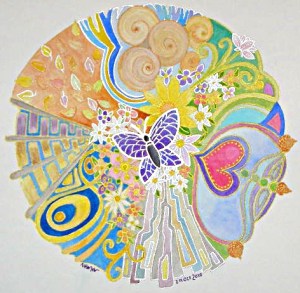
        Auragraphs are intuitive works of art that result from a sensitive person ‘tuning into’ another person’s energy, aura, being.  The colours, shapes, symbols and patterns all have meanings that can be interpreted, giving an insight into the recipients personality, life, and potential.  I’ve been experimenting with them for the last couple of months, and yesterday I was showing them to people at an open day at a local spiritual organisation.

        A couple I had already done found their way to the people they were meant for.  Orders were taken for another couple, and all the proceeds are going into the organisations funds as donations.  It was an interesting experience for me in many ways.

        Giving the interpretation (reading) for the recipient was interesting, and it was nice that they were so right.  Working with someone who wants one done for them and allowing the images/shapes to flow on to paper – just as sketches – and talking about why they are appearing and what they mean, and getting feed back on that was very interesting.

        The two ordered have only been done as sketches; they will take around 12 hours each to complete, so that will keep me busy, as will writing down the readings for those verbally given will be interesting!  I really do need to carry my digital dictaphone with me more often I think.

        The Ghost Train

        Punkie1 © Angela Porter 2010I actually made it to the Pontypool and Blaenavon Railway yesterday, after the open day at Treforest.
        I didn’t arrive until around 5:30pm and most of the visitors had been and gone.  I did get to read one story to one family.  And that was fine.  Though I did enjoy winding up small children in a nice way, as well as saving them from the scary vampire who was stalking the carriages!  I do hope I’ll get to read some more stories today …

        I really enjoy story telling /reading.  It’s another shared activity that bonds people together, allows them to make connections, and it’s also an opportunity for imaginations to be used, something that isn’t done so often these days.

        This may be my last time at the railway, however.  I find the connections I once thought I had there are now very weak, if not non-existent.  Things change, which leads me to …

        What All Hallows Eve Means to Me

        Autumm Leaves © Angela Porter 2010

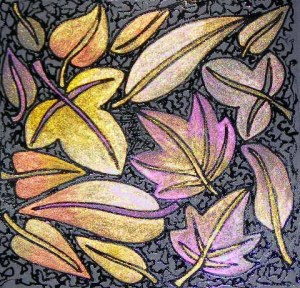
        I always think of All Hallows Eve (Hallowe’en to you!) as mid-Autumn.  It certainly is this year; the world is wearing its coat of glorious flaming Autumn hues!  I love it when I drive along through a flurry of leaves blown off the trees by a sudden gust of wind.  The warmth of the colours envelops me as I journey around the world, a warm memory is being stored to see me through the cold, dark days of Winter.

        The Earth is preparing to sleep through those Winter days, taking a hard-earned rest before coming to life again in the Spring.  All that is unnecessary, finished with, complete  is being shed, the falling leaves being symbolic of that.

        As this clearing out happens out in the world of Nature, so it happens within.  It’s time to look back on the year, to give thanks for what is complete, finish that which is almost complete, and let go of that which is finished, has served its purpose, that we have outgrown.  In doing so we make space in our lives for further personal growth.  And this is the potted version of how I relate to this particular spoke on the wheel of the year.

        For me, it seems the railway is to go.  My SmartCar and all her problems have gone.  I may soon be finished with counselling … but we’ll see about that, there’s still my self-image, confidence, self-love to be worked on.  I’m not sure about anything else, but that will become apparent as time goes on.

        Shimmer Doodles

        Shimmer Doodle 1


        Shimmer Doodle 1 © Angela Porter 2010

        It was suggested by Sonja Gartner on Paintings I Love that I try working on dark backgrounds using gel pens.  So, I’ve had a play, and the work above is the result of that, though getting a good image of something that shimmers and glows is not easy.

        It’s just a doodle on A4 black card using various metallic, glitter and pastel gel pens (including Sakura Souffle, Glaze and Gellyroll pens, with some new ones acquired from Stamposaurus), metallic coloured pencils and metallic/iridescent/pearlescent watercolour paints made by Cosmic Shimmer.

        It took many hours to complete the doodle, and I thoroughly enjoyed it, though the choice of the purple pastel souffle pen to do the outlines was not the best one, but you live and learn!

        This also kept my inner magpie happy – the part of me that loves shimmer and glisten and things shiny and bright.  And there is something so nice about turning the dark to light, which is perhaps a metaphor for my life and my purpose in life!

        Anyway, the pleasure in working this way led me to hunting down suppliers of various gel pens online and ordering more to work with, both on black/dark backgrounds and light backgrounds.  I ordered a load of Uni-Ball gel pens from TigerPens, and the arrived this morning!  More toys to play with!  Yay.  I also ordered a few more Sakura pens from Stamposaurus, and they have yet to arrive.

        Tesserae Carnivale 1


        Tesserae Carnivale 1 © Angela Porter 2010

        This is a tiny piece of art, something that started as a ‘lets try it and see’ and ended up being finished!  It’s around 10.5cm x 9cm.  The outlines are worked in Sakura Glaze in a light green.  The sections are coloured with watercolour paints.  No metallics.  No shimmers.  When the Glaze pen dries, it leaves a raised up line, which is perfectly reminiscent of stained glass windows.  It would’ve been more stained-glass-like if I’d used a black pen, but I didn’t have a Glaze pen in black, but will soon have.

        Fun to do, fun to pick out shapes/patterns/layers in different colours as well as to play with complementary colours again.  I do so love bright colours.

        And, yes, I’d love to have a stained glass window a little like this in my home … it would colour the room with a glorious rainbow of colour!

        Punky Night – A Somerset Custom

        Pumpkin3 © Angela Porter October 2010

        It’s Punky Night tonight
        It’s Punky Night tonight
        Give us a candle, give us a light
        It’s Punky Night tonight!

        This is one of the verses of a song changed by children as they carry their ‘punkies’, or Jack O’ Lanterns around villages in Somerset, England, UK and, in times past, begging for candles.  In the village of Hinton St George, Punky, or Punkie, Night is the last Thursday in October.

        Other variations on the verse include,

        It’s Punky Night tonight
        It’s Punky Night tonight
        Adam and Eve would not believe
        It’s Punky Night tonight!

        It’s Punky Night tonight
        It’s Punky Night tonight
        Give me a candle, give me a light

        If you don’t, you’ll get a fright!
        It’s Punky Night tonight

        It’s Punky Night tonight
        It’s Punky Night tonight
        Give me a candle, give me a light
        If you haven’t a candle, a penny’s alright

        It’s Punky Night Tonight!

        If you want to sing-a-long with the words, visit “The Punky Night Song” webpage!

        The threat of something not nice happening if a person didn’t give the children something compares to the more modern tradition of ‘trick or treat’.

        Punkies are made from a mangold-wurzel, or a large turnip, in a similar manner to modern Hallowe’en pumpkins.  The top is cut off, the insides scooped out and designs are cut into the outer skin, leaving a thin membrane intact.  Scary faces are common, but there are many examples of more creative designs.  A lighted candle is then placed inside to shine through the cuts.

        Despite the usual assumptions that this custom is an ancient one, there is little evidence of its existence before the C20th.  Various nights in late October served for this custom, but Hinton St George eventually settled on the last Thursday in October.  At one time, it seems to have been a simple house-visiting custom, but members of the local Women’s Institute reorganized it in the mid twentieth century.  It is now celebrated by a procession of children carrying their punkies, and a party where prizes for the best designs are given, a Punkie King and Punkie Queen are crowned and money is raised for charity.

        A local legend purports to explain the custom’s origin.  One version of the legend is that the village menfolk went to Chiselborough Fair, and got too drunk to find their way home.  Their wives fashioned lanterns out of mangold-wurzels and went to fetch them.   There are variations on the tale, in some the menfolk make the lanterns, in others the drunken menfolk are scared by the lanterns scary faces believing them to be ghosts of dead children returning to the Earth until Hallowe’en.  The neighbouring village of Lopen claims the custom (and legend) as their own, and other villages have started their own punkie nights.

        As a child, I remember helping to carve Jack O’ Lanterns from swedes.  Pumpkins were not a common item then.  It wasn’t easy work either, and my father usually took control of matters very quickly, at least by hollowing out the swede so that we could carve the designs into the shell more easily and with less likelihood of us cutting off our fingers, or worse!  The smell of cooking swede pervaded the house once the candle was lit; whenever I smell cooking swede I get get flashbacks to childhood Hallowe’en, before it became dominated by ‘trick or treat’ and the various forms of antisocial behaviour that occur on that night, and the surrounding nights.  We had our own Hallowe’en party in our home, with local friends visiting with us.  The living room was decorated with blood-red crepe paper streamers, home-made black bats and spiders and webs.  Candle light was the order of the evening.  We made ghoulish food that involved a lot of food dye!  Ducking apples, bobbing apples were always played. And the climax of the proceedings involved the  delivery and display of Captain Blood’s Cake, dripping with blood-coloured icing and ghastly green writing and a single candle placed in the middle of the cake.  This heralded the beginning of ghostly and ghoulish stories.  They would start with a tale about Captain Blood, and then would go onto other things as we children would exercise our imaginations to tell tales, add to the tale being told, and scaring ourselves with what we found most fearful.  It must be said there was a lot of laughing as well!  These were perhaps some of the best times of my childhood … even though I was most probably too shy to tell the tales, my imagination would run away with me and everyone would make fun of me, and I still bear those scars today, finding it hard to tell stories, write tales, be imaginative.  I’ll get over it though.  I will.

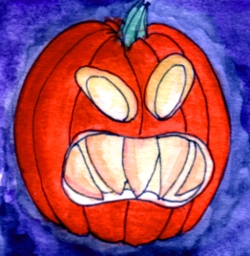
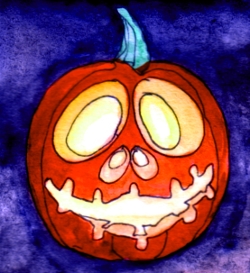
        The drawing of a pumpkin punkie was done using a very fine technical drawing pen (0.1mm) and watercolour paints on cartridge paper.  The sketch was completed very quickly, the painting took a little longer as the white purry-furry one wanted to help/hinder by demanding cuddles and fusses!   I then fiddled with it in GIMP2 to make it more vibrant in colour, more blurry and better looking than the original!  I have a couple more done that I’ll use to decorate any entries I do about Hallowe’en.

        1. Steve Roud, “The English Year”
        2. Punkie Night at information-britain.co.uk
        3. Punkie Night at Monstrous.com
        4. It’s Punky Night! at wyrdwords.vispa.com
        5. Ronald Hutton, “The Stations of the Sun”
        6. Punkie Night at wikipedia
        7. Jack o’ Lanterns at wikipedia
        8. Jacqueline Simpson and Steve Roud, “A Dictionary of English Folklore”