Lammas

Today is Lammas, a name that derives from the Old-English hlafmaesse, which means ‘loaf-mass’.  August 1st is also known as Lughnasadh or Lughnasa, particularly among the modern Pagan community, and you can find loads about it on the world weird web.

Anglo-Saxon church records from the ninth century onwards show that that Lammas was the festival of ‘first fruits’ with wheat, corn and bread to celebrate the corn harvest.

The first ripe cereals were reaped and baked into bread which was consecrated at a church upon that day.  A book of Anglo-Saxon charms advised that this holy bread be divided into four pieces, each of which was crumbled in a corner of a barn in order to make it a safe storage-place for the harvest about to arrive there.

Certainly, the arrival of the time when the first harvest could be gathered would have been a natural point for celebration in an agrarian society, and the importance of the first day of August was already so well established by 673 that Archbishop Theodore of Tarsus decreed that the annual synod of the newly established Church in England should be held then.  It seems very likely that a pre-Christian festival had existed among the Anglo-Saxons on that date.

Although not one of the official quarter days, Lammas was a regular day for paying rents, settling debts, and changing jobs and houses.

It’s position in the year also contributed to its key role in the organization of rights to common lands.  Where common or church land was rented out by the half-year, or where common strips of land were apportioned annually, Llamas was often the time that the business was carried out.

Lammas was also a popular day for fairs, for example at Exeter and York, and local feasts and revels, such as at Combe Martin in Devon.  Temporary rules and regulations were in force during the time of a fair, it was important that everyone knew when the fair opened and closed, and impressive civic processions and readings of proclamations were often reported, along with the use of highly visible symbols that were displayed while the fair lasted.

Another name for Lammas is ‘the Gule of August’, and this phrase was in use from at least 1300; it also was in use in Old French and Medieval Latin.  One suggestion is that ‘Gule’ derives from the Welsh ‘gwyl’, or ‘feast’, but it’s not clear why or how Norman English or Old French picked up such a word.  It is more likely that the word is derived from Latin.  For more about this read ‘The Stations of the Sun‘.

References:

  1. The English Year, Steve Roud
  2. Stations of the Sun, Ronald Hutton

Lammas thoughts

The new wheat of the year and the first loaf baked with it.  Wheat and other cereal crops are one of the western world’s staple foods.  Agriculture, one of the major innovations of the Neolithic peoples, allows us to grow vast quantities to ensure we are all fed, we all have bread to feed our bodies.  How many of us take this for granted?  How many of us pause to consider those in other parts of the world who do not have enough bread to sustain their bodies, bread being an analogy for essential food?

Today is a day, traditionally, to give thanks for the harvest that will feed us, but it would be nice for us to think of those who struggle to find enough food to feed them, whether it be through environmental disasters, societal turmoil, war, or man’s inhumanity to man.  We could also send thoughts to the animals and plants who are suffering as much as mankind, often far more, through natural and man-made disasters and atrocities.

It is a time for community.  In the past, communities would come together to gather the harvests in as quickly as possible so little was spoiled and all was safely stowed away to last through the coming year.  It was a time of hard but necessary work.

This takes us back to the thoughts about those in the world and how the paradigm needs to change to a world community where we help one another to ensure all have enough for a decent life.  Take time today to consider those who do not have enough food or any other necessities of life, and consider making a commitment to donate regularly to charity to help these people, if you don’t already do so.  Of course,  the world community includes not just humans, but all other living things, and the very Earth itself, for without these life would not be possible, would it?

These are the general and worldwide issues that come to mind in connection with Lammas; but what of the more personal, more symbolic messages that come with the first harvest of the year?  What spiritual bread is there?

We all sow symbolic seeds – new beginnings, new projects, new ways of looking at ourselves, new ways to interact with people, and so on.  These seeds will germinate in fertile ground, where we nurture them, and eventually they will bear the fruit of our efforts.  Today is a day when we can look back at the seeds we planted in the spring and see what ‘fruits’ are ripe and ready to be plucked, and which need to be left to grow more before they will mature.

Another meaning is transformation.  Wheat must die for it to give us sustenance and also so that new life can spring again from it when it’s seed is planted in the Earth.  The life of the wheat is sacrificed to make way for new plants in the Spring.

So it is with our lives; we need to ‘sacrifice’ situations, projects, tasks, and so on that have reached their conclusion, let go of those that will not grow or have not germinated, and we need to do this in order to move onward, to allow new things to enter our lives.

Change is never easy, but it is necessary if we are to grow and realise our potential in all things.  Lammas marks the start of the time when we can savour the fruits of our efforts.  A time when we can experience the sweet taste of success, or the bitter taste of failure.  Either way, Lammas is the time to start to let them go from our lives as it is the first harvest, the start of clearing the land of the crops that have either matured successfully or failed for various reasons.  Lammas is the time to look within ourselves and in our lives to see where this is also the case.

This letting go of what has ended, no matter if it is a success or a failure allows a symbolic death of that which has come to its end.  This is echoed in the increasing period of night that we notice at this time of year.  The nights are drawing in, and while the days are still hot and balmy, there is a feeling of change in the world as we move to the Autumn Equinox.  Yes, nature still flourishes and grows and fruits continue to grow and to ripen, but with the first harvests we begin to see nature coming towards the end of its yearly cycle of growth, the fields being laid bare ready for sowing with new seeds.

For now we can celebrate our successes, learn from our failures, and mourn letting go of what is complete, knowing that as one thing ends something new is on it’s way, just as a bare field means new growth will come in the Spring.

Whatever you consider today, whatever you think about Lammas, enjoy the day!

The Calendar

Time to change your calendars and diaries over!  Happy new calendar day for MMXI!

The Sun and the Year

It takes the Earth 365.24219 mean solar days to orbit the Sun once.  This is slightly more than our nominal 365 day long year, so every four days we have a leap year, with 29 days in February instead of the usual 28.  This still isn’t quite right, so the last year of every century is not a leap year unless the year is divisible by 400, which is why 2000 was a leap year but 1900 wasn’t.

There are four key points in the Earth’s yearly journey around the Sun.

The Solstices are where the Sun appears to stand still at solar noon for a few days, this means that it is in the same position in the sky at solar noon.  Solstice comes from the Latin sol for Sun and sistere which means to stand still.  Around the 21st December each year, the Sun is the furthest south from the equator in the sky and we in the northern hemisphere experience the Winter Solstice, the shortest day in the year.  Around the 21st June, the northern hemisphere’s Summer Solstice occurs, with the Sun being at it’s most northerly from the equator.  This is the longest day of the year for us.

The Equinoxes occur in between these points.  The Vernal Equinox occurs around the 21st March and the Autumnal Equinox around the 21st September each year.  On these days, the Sun is directly over the equator.  These are days where the hours of daylight and night are approximately equal, and the word equinox comes from the Latin equi meaning equal and nox meaning night.

To our modern eyes, the cycles of the Sun are important in terms of determining the seasons, the weather, agricultural practices and so on.  But that wasn’t always so.

The Moon and the Year

To early man, it was the Moon, with its cyclical waxing and waning that was the more obvious object to use to measure time and all the earliest known calendars are lunar, based on the phases of the Moon.  Indeed, the word month comes from the use of the phases of the Moon to split the year up into segments.

It takes long and complicated sums to link the cycles of the Moon to those of the Sun.  A lunar month is 29.5306 days long, so a twelve month lunar year would last just over 354 days and so is around 11 days out of step with the Solar year.  If we were to follow a lunar calendar, it would take just about 16 years for the seasons to be completely reversed.

Julius Caesar and the 1st January

Whatever the religious reasons may have been to keep to a lunar calendar, it must have been obvious that it was the cycles of the Sun that had the biggest effect upon human activity.  It was the turning of the seasons that determined when crops were to be sown, when they were due to be harvested, when the weather would be good enough to set sail, and for so many other things too, yet the lunar calendar was still in use, with all the problems of errors and corrections that needed to be made until the Julian calendar was introduced by Julius Caesar in 45BC.

Caesar learned of this calendar from the Egyptians.  Legend has it it was at a party thrown by Cleopatra in his honour.  The Julian calendar was based on a 365 day year, with an extra day thrown in every 4 years.  Each year had twelve months with thirty or thirty-one days, except February, and the 1st January was set as the beginning of the year.

The calendar as we know it today was now more or less in place.  It was regular, secular and based on the real movements of the Sun.

Dark Times

Emperor Constantine (d. AD377) imposed Christianity as the major religion of the Roman Empire and he placed the design of the calendar back in the hands of religious groups who were still wedded to the traditional lunar movements for their major festivals.  After the collapse of the Roman Empire, the Christian church was the nearest thing to an international controlling committee and the West entered a long, dark time where scientific enquiry was frowned upon at best and considered heresy at worst.

The Gregorian Calendar

By the C16th, the western world was stable enough to attempt to reform the calendar.  The small errors from the Julian calendar had now become noticeable and annoying.  In 1582 Pope Gregory finally announced changes in the calendar to correct these faults and prevent them from happening again, including the 400 year rule for leap years mentioned previously.

He introduced what became known as the Gregorian Calendar, and ordained that 5th October should become 15th October to bring the calendar back in line with the physical world.  This was a much needed and a sensible solution to the problem of the calendar.

However, the changes were not universally accepted, especially in Protestant countries such as Britain.  The changes were declared to be a ‘Popish plot’ designed to undermine their credibility.  For more than a century following this Papal decree, half of Europe was 10 days ahead of the other half!

It took Britain until 1752 to adopt the changes, by which time it had to correct the calendar by 11 days to bring it back into line with Gregorian calendar.   Philip Stanhope, fourth Earl of Chesterfield, initiated this move by introducing a Bill to correct the ‘inconvenient and disgraceful errors of our present calendar’.  This Bill was signed into law by George II on 22nd May 1752.  Chesterfield’s Act  decreed that Wednesday 2 September 1752 be followed immediately by 14 September 1752 and also that the New Year was to start officially on 1st January.

Mistletoe and Ivy

Well, as I’d done some notes about holly previously I thought it would be a good idea to complete the trio of plants most associated with Yuletide/Christmas/Winter festivities.

Mistletoe (Viscum album)

Early antiquaries thought all types of Christmas foliage came from that used by the Romans at Saturnalia, which was a festival that originated in Greece.  However, once mistletoe became especially popular, the more picturesque theory of Druidic origin gained ground.  Pliny the Elder (AD 23-79) recorded the following about mistletoe:

The Druids hold nothing more sacred than mistletoe and a tree on which it is growing, provided it is Valonia oak … Mistletoe is, however, rather seldom found on Valonia oak, and when it is discovered it is gathered with great ceremony, and particularly on the sixth day of the Moon (for which these [Gallic] trips constitutes the beginning of the months and years) … Hailing the Moon in a native word that means ‘healing all things’, they prepare a ritual sacrifice and banquet beneath a tree and bring up two white bulls, whose horns are bound for the first time on this occasion.  A priest arrayed in white vestments climbs the tree and with a golden sickle cuts down the mistletoe, which is caught in a white cloak.  Then finally they kill the victims, praying to God to render his gift propitious to those on whom he has bestowed it.  They believe that mistletoe given in drink will impart fertility to any animal that is barren, and that it is an antidote for all poisons.

Steve Roud in ‘Oxford Dictionary of Plant-lore’ comments that ‘largely as a result of this passage, more nonsense has been written about mistletoe than any other British plant’.  It is responsible for more disinformation in British folklore than almost any other.   Whatever its merits in itself, it has been repeated over and over and has been used for many flights of fancy about Druids and the ancient origins of our customs and beliefs.

Because of its Druid and pagan associations, mistletoe is traditionally banned from churches, according to the very influential John Brand in 1849.  However, recent research has shown he was wrong, at least for some regions such as Staffordshire where churchwardens’ accounts record repeated purchases of mistletoe.  In 1648 is first listed among the many evergreens decking churches and homes at Christmas by Herrick in Hesperides, no 893.   From the Middle Ages on, the use of holly and ivy in this way has been well recorded.

Mistletoe became important in the late 18th century as part, and soon to be the most valued part, of the elaborate kissing boughs/bushes that were hung up in farmhouses and kitchens, of which kissing under the mistletoe was first recorded in 1813.  There were rules as to when it must be taken down, which varied regionally.  Why mistletoe was included was never recorded, and why kissing beneath it became popular is never fully explained, though it is commonly attributed to it being a Druidic/pagan fertility plant.  This has been stated again and again that it has become ‘The Truth’ as opposed to ‘the truth’.

‘Pliny was writing about the Gauls, not the Brits.  We do now know where or from whom he got his information about the Druids.  Classical authors, however reliable they may be in other respects, are at their most unreliable when describing foreign people, their lands and their beliefs.  There is no hint anywhere else to support Pliny’s report.  There is no other mention of the sacred nature of mistletoe in Britain until antiquarians began reading and believing Pliny’s report some 1500 years later.  Even if Pliny’s report was accurate, there is no evidence that the practice was continued into historical times or had any influence on later lore.  Modern mistletoe beliefs are reported almost exclusively from England, and not the Celtic areas where was are told the Druidic traditions continue to have resonance.’ (4)

Nordic Mistletoe Myths

There may be a link to ancient Nordic myths too.  Mistletoe, apparently, was the plant of peace in Scandinavian countries and if enemies met beneath it, they would lay their arms down and keep a truce until the next day.  Perhaps it was this ancient Norse custom that led to the one of kissing beneath the mistletoe?

This tradition, however, went hand in hand with the story of  the death and resurrection of Baldur, one of the most intriguing of the Norse myths, and perhaps it is this that is the start of the tradition of mistletoe as a ‘kissing plant’.

Baldur’s mother was the Norse goddess, Frigga. When Baldur was born, Frigga made each and every plant, animal and inanimate object promise not to harm Baldur.  However, Frigga overlooked the mistletoe plant — and the mischievous god of the Norse myths, Loki, took advantage of this.  Always the prankster, Loki tricked one of the other gods into killing Baldur with a spear made from mistletoe.  This god was Hoder, who was Baldur’s blind brother.  Loki guided Hoder’s hand, and Baldur’s heart was pierced by the spear.  The death of Baldur, a vegetation deity in the Norse myths, brought winter to the world, although the gods did eventually restore Baldur to life, but not before Frigga’s tears had become the white berries of the mistletoe.   After this, Frigga pronounced the mistletoe sacred, ordering that from now on it should bring love rather than death into the world.  Happily complying with Frigga’s wishes, any two people passing under the plant from now on would celebrate Baldur’s resurrection by kissing under the mistletoe.Mistletoe etymology

While the romantic traditions woven around mistletoe give us a feeling that the plant is all dreamy and lovey-dovey, it’s interesting to ponder the etymology of ‘mistletoe’.  The second century Anglo-Saxon name for it was misteltan, with  mistel meaning dung and tan meaning twig.  It was believed at that time that the plant grew directly from the birds’ dung rather than the seed that passed through its digestive system.

Kissing and love

  • When a kiss is exchanged beneath the mistletoe, a berry should be removed.  Once all the berries have gone, no more kissing that year!
  • If an unmarried woman is not kissed beneath the mistletoe, she will not marry in the coming year.
  • If a couple in love kiss under the mistletoe, it is considered a promise to marry.

After Christmas is over …

  • Mistletoe should always be kept until the Christmas following.  It is believed around the Chudleigh district that it will stop the house from being struck by lightning.  At Ottery they say it will ensure that the house will never be without bread.
  • A piece of mistletoe must be kept to be burned under the Shrove Tuesday pancakes.
  • A piece of mistletoe must be kept from one year to the next because while mistletoe stays in the house love also stays.
  • A sprig kept hanging on the beam until next Christmas will keep the witches out/keep evil spirits way/goblins away.

My own mistletoe tradition

I must admit that I keep a bunch of mistletoe hanging in my front room at home.  I change it, usually, on the Winter Solstice, burning the old out doors.  I use a blowtorch to set fire to the old bunch and it burns fantastically well!  I make sure I stand upwind of the fumes too.

Why do I do this?  Well, it’s become a tradition for me at this time of year.  It symbolises the protection around my home that exists to keep bad away – maybe not ghosties and ghoulies and things that go bump in the night, but to keep people of ill intent out, to neutralise any ill intent sent my way, to create an environment of peace and harmony and love.  It seems to work … perhaps simply because it is a physical symbol of my intent to have such an environment around me, a safe environment to retire to when the world outside is just too much to cope with and I need quiet time to rest and recuperate.  Burning the old symbolises letting go of the past years’ troubles and worries and upsets and so on, and the fire purifies the darker elements that the mistletoe has symbolically soaked up, returning them to the light.

Whether you believe it or not, it works for me!

Ivy (Hedera helix)

Considered by some to be unlucky to have in the house at any time other than Christmas.

Ivy leaves formed the poets crown in ancient times, as well as the wreath of Bacchus, to whom the plant was dedicated most probably because leaves of ivy were bound around the forehead to prevent intoxication.

    Greek priests presented a wreath of ivy to newly-weds as a symbol of fidelity.

      English taverns used to display a sign of an ivy bush over their doors to advertise the excellence of the liquor served within – ‘Good wine needs no bush’.

        References

        1. Steve Roud, ‘Oxford Dictionary of Plant-lore’
        2. Jacqueline Simpson and Steve Roud, ‘ A Dictionary of English Folklore’
        3. Ronald Hutton ‘The Stations of the Sun’
        4. Steve Roud, ‘Penguin Guide to the Superstitions of Britain and Ireland’
        5. The Mistletoe Pages
        6. Norse Myths and Mistletoe at About.com
        7. The Truth vs. the truth – an old Wyrdsmithing blog engry
        8. BBC’s h2g2 website

        Winter Solstice 2010

        All the very best of the Winter Solstice greetings and wishes to all!

        The exact point of Solstice is at 23:38 UTC, which is when the Sun enters Capricorn.   In the Northern Hemisphere, this marks the longest night and also the gradual returning of light to the world as the days gradually lengthen once again.

        What makes this year’s Winter Solstice extra special is that there is a Lunar Eclipse fall on the same day, for the first time since 1638.  Sadly, it was not possible for me to view the Lunar eclipse as the skies were cloudy here, and no doubt the hills would have obscured my view of the Moon in any case.

        In my immediate environment, in the Northern Hemisphere, nature is in it’s annual dormancy and the return of the light from this day on is a reason enough to celebrate the continuation of nature’s seasonal cycle.  With the snow still covering the ground, life having slowed down due to the freeze here in the UK, there’s an even bigger sense of the big sleep of nature.

        The Winter Solstice had, no doubt, great significance to prehistoric people, no doubt linked to the uncertainty of seeing life through the harsh winter months.  Evidence for this remains in the apparent alignments of Neolithic and Bronze Age sites such as Stonehenge (Winter Solstice 2010 at Stonehenge) in England and Newgrange (Winter Solstice at Newgrange 2010) in Ireland to astronomical events such as the Winter Solstice.  The lives of these people depended very much upon the seasons and weather and it must have been important for them to mark the cycles of the seasons in some way, just as we do still.

        The Feast of Yule was a pre-Christian festival observed in Scandinavia.  At this time of year, fires were lit to symbolise the heat, light and life-giving properties of the returning Sun.  A Yule log was brought in and burned in the hearth in honour of the god Thor.  A piece of the log was kept to act as both a good luck token for the year and to act as kindling from which the next year’s Yule log was lit.  Ashes from the log were also collected to be spread on the fields to ensure a good harvest that year.

        There are many festivals coinciding with the Winter Solstice around the world, as can be easily read about on the web – see for instance Wikipedia.

        How will I be spending the day?  Well, not as I would in years past.  Normally, I’d replace my bundle of mistletoe at dawn, burning last year’s old bunch.   This will have to wait for a day or two until I can get out and about!   The mistletoe hung in the home acts as a protection against negative thoughts and deeds.  Burning it releases and purifies that which it has absorbed over the year.  Part of the day will be spent in meditation/quiet thought/reflection on the past year and particularly upon the progress I have made in achieving goals in life and giving thanks for all those people and circumstances which have aided me in my progress, whether they realised it or not, and whether I realised it or not at the time! Sometimes, the people and situations that vex us most are responsible for the greatest progress in our personal development.

        How will you spend the day?

        1. Guardian – Article about the coincidence of Solstice and the Lunar Eclipse
        2. National Geographic – Article about the coincidence of the Solstice and the Lunar Eclipse
        3. Winter Solstice at Time and Date.com
        4. December Solstice Traditions at Time and Date.com
        5. Winter Solstice on Wikipedia
        6. Yule on the BBC website

        Holly

        English Holly (Ilex aquifolium)

        Holly © Angela Porter 19 Dec 2010

        Etymology

        The word holly comes from the Old English ‘holegn‘ which became the Middle English ‘holin‘, which Tolkien fans will recognise – Hollin was the name among men for the land of Elves that thrived to the west of the Mines of Moria, known as Eregion, and it was famous for its holly trees.

        In Welsh holly is called celyn.  In Terry Pratchett’s ‘Soul Music’, Imp Y Celyn is the lead singer of The Band With Rocks In

        Folk names for holly hulver bush, holm, hulm, holme chase, holy tree and Christ’s thorn.

        Holly decorations

        Holly is one of the most striking objects in the winter woodland with its glossy leaves and clusters of brilliant scarlet berries. It is very much connected with Christmas in many Western cultures. From very early days, it was gathered in great quantities for Yuletide decorations, both of the church and the home. The old Christmas Carols are full of references to holly.

        Christmas decorations are said to derive from a Roman custom that involved sending gifts to their friends during the festival of Saturnalia which occurred in mid-December. Strenae, twigs of holly or laurel with sweets fastened to them, were a popular gift. Boughs of holly and other evergreens were also used as decorations. Evergreens are symbolic, of course, of enduring and renewed life as well as a way to encourage the return of vegetation at the end of Winter.

        The Christians were quick to adopt holly for their own celebrations, with the holly representing the crown of thorns that Jesus wore, the berries symbolising drops of blood. A medieval legend asserts that the holly sprang up from the places where Christ walked, hence the name Christ’s Thorn.

        Old church calendars have Christmas Eve marked ‘templa exornantur‘ (churches are decked), and the custom is as deeply rooted in modern times, whether you celebrate Christmas, Yule, the Unconquered Sun, or the return of the light, as it was in either pagan or early Christian days.

        Childhood memories of ‘trimming up’.

        As a small child, I can remember going to bed on Christmas Eve to an ordinary home.  Generally, we were in bed early –  6pm on a school night, 7pm any other night.  On Christmas Eve, my parents used to keep us up until gone 7pm just to try to get us all to sleep through the night – I am one of six children, the second oldest.  I’d be blamed for everything, including the indecently early hour of waking on Christmas morning.  We’d make our way downstairs, bags of gifts in hand, and we’d be amazed!  The stairwell was lit by twinkling fairy lights.  The front room was sparkly with shimmering tinsel, metallic versions of fancy paper-chains, and the lights, baubles, lametta and tinsel on the tree.

        As a child this was magic!  It was, in many ways, the best part of the day.  We were always told that the the fairies that lived in the central heating did the work of decorating, but as we grew up, we took our places to help the ‘rents decorate, as well as taking part in the toast at 10pm to members of the family past and present.  Even when we were all young adults, the house was never decorated before Christmas Eve, and even when we all had moved away to our own homes we still returned on Christmas Eve to decorate for the ‘rents.  I still believe the rest of the family do so now.

        Holly superstitions

        It is said to be unlucky to cut a branch from a holly tree; it should be pulled off instead.

        Old stories advise people to take holly into their homes to act as a shelter for elves and fairies who could join mortals at this time without causing them harm. However, it must be entirely removed before Imbolc Eve (31st January) as just one leaf left within the house would result in bad luck.

        In Somerset, it was considered unlucky for holly to be brought into the house before Christmas Eve, and then only brought in by a man.

        In Herefordshire and Worcestershire, a small piece of holly which had adorned a church at Christmas time was regarded as very lucky to hang up in your home, even though the domestic decorations had to be burned as usual.

        Pliny tells us that if holly is planted near a house or a farm it would repel poison, deflect lighting and protect from witchcraft.

        Pythagoras noted that the flowers would cause water to freeze and if the wood, if thrown at any animal, would cause the animal to return and lie down by the wood, even if the wood did not touch the animal.

        A good crop of berries on holly is still said to be a sign that a hard winter is on the way.

        Holly uses

        Holly wood is heavy, hard and white-ish and it was used for the white chess pieces, ebony being used for the black.

        In the 1800s, weaving looms had holly wood spinning rods; holly was less likely to snag the threads being woven as it is a very dense wood and can be sanded very smooth.

        Peter Carl Faberge used holly cases for his famous Easter Eggs, as well as small objects such as hand seals.

        Holly is also used for veneering.

        1. www.wikipedia.com
        2. www.botanical.com
        3. homepage.ntlworld.com/blackbirdhollins/articles/Holly%20tree.htm
        4. “English Folklore” J Simpson and S Roud

        Happy All Hallows Eve (Hallowe’en or Samhain to you)!

        Hallowe’en

        Punkie3 © Angela Porter 2010

        Well, it’s that time of year again isn’t it?  And it’s another time to consider the truth vs. “The Truth“.  “The Truth” is that this is an ancient pagan holiday, mainly thanks to the writings of Frazer in ‘The Golden Bough’ where he cites this as The Truth, yet there is little evidence if any for it being so (see Hutton “The Stations of the Sun’ for more details)!

        There were fairs and courts held in ancient Ireland at this time, a time called Samhain by them.

        The Venerable Bede writes that this time of year was known as ‘Blod Monath’ which means Blood Month – the month where all unnecessary animals were slaughtered to save fodder and the people would feast on the parts that could not be preserved.

        The truth is that it’s actually more of a Christian celebration in origin!  Today is the eve of a major Catholic festival – All Saints Day (1st November) which dates from the 8th Century.  All Souls Day (2nd November) was instituted around the year 1000 as a day to pray for the dead.  In England since the 19th Century, and increasingly in the 20th and 21st Centuries, it has gained a reputation as a night on which ghosts, witches and fairies are especially active.  Why this should be so is debatable, and returns to the truth vs. The Truth.

        Different sections of society have claimed it for their own, or are rejecting it as being their own.  Who is right?  Everyone!  One thing is certain, Hallowe’en is big business, especially in America, and increasingly so here in Britain.

        There are many traditional events and activities here that are overshadowed by the sheer bad behaviour and malice that a minority seem to partake in with delight.  It is an aspect of this time of year that I dislike…and I don’t need to say any more about that.

        I do think it’s good that children can face their fears in a safe, measured and fun way.  We all like to be scared in a safe environment; if we didn’t then the horror films and books and games wouldn’t appeal to us.  It’s part of growing up, learning to manage our fears, to indulge in imagination, to experience a different world of wonder.  It’s not just Hallowe’en that allows children to explore this; the traditional fairy stories aren’t all sweetness and light are they?

        As to it being a festival that promotes evil and satanism, well, I don’t think so.  Those who would be drawn to such systems would be regardless of Hallowe’en, lets be honest.

        As much as I can be pedantic about ‘the truth’ and I like to know where the traditions and beliefs have come from (the scientist, researcher in me will not be denied), I also know that traditions change and evolve over time.  What is important, perhaps more than anything else, is that traditions link us together.  We can be sure that we are not the only ones having fun at this time, indulging in shared events, and it is that sharing that reaffirms that we are all connected in some way.

        Auragraphs

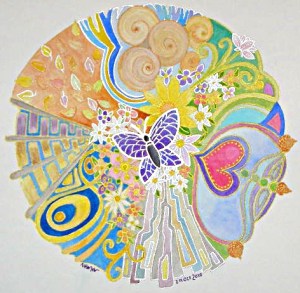
        Auragraph for Liz © Angela Porter 28 October 2010

        Auragraphs are intuitive works of art that result from a sensitive person ‘tuning into’ another person’s energy, aura, being.  The colours, shapes, symbols and patterns all have meanings that can be interpreted, giving an insight into the recipients personality, life, and potential.  I’ve been experimenting with them for the last couple of months, and yesterday I was showing them to people at an open day at a local spiritual organisation.

        A couple I had already done found their way to the people they were meant for.  Orders were taken for another couple, and all the proceeds are going into the organisations funds as donations.  It was an interesting experience for me in many ways.

        Giving the interpretation (reading) for the recipient was interesting, and it was nice that they were so right.  Working with someone who wants one done for them and allowing the images/shapes to flow on to paper – just as sketches – and talking about why they are appearing and what they mean, and getting feed back on that was very interesting.

        The two ordered have only been done as sketches; they will take around 12 hours each to complete, so that will keep me busy, as will writing down the readings for those verbally given will be interesting!  I really do need to carry my digital dictaphone with me more often I think.

        The Ghost Train

        Punkie1 © Angela Porter 2010I actually made it to the Pontypool and Blaenavon Railway yesterday, after the open day at Treforest.
        I didn’t arrive until around 5:30pm and most of the visitors had been and gone.  I did get to read one story to one family.  And that was fine.  Though I did enjoy winding up small children in a nice way, as well as saving them from the scary vampire who was stalking the carriages!  I do hope I’ll get to read some more stories today …

        I really enjoy story telling /reading.  It’s another shared activity that bonds people together, allows them to make connections, and it’s also an opportunity for imaginations to be used, something that isn’t done so often these days.

        This may be my last time at the railway, however.  I find the connections I once thought I had there are now very weak, if not non-existent.  Things change, which leads me to …

        What All Hallows Eve Means to Me

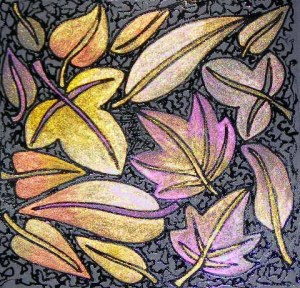
        Autumm Leaves © Angela Porter 2010

        I always think of All Hallows Eve (Hallowe’en to you!) as mid-Autumn.  It certainly is this year; the world is wearing its coat of glorious flaming Autumn hues!  I love it when I drive along through a flurry of leaves blown off the trees by a sudden gust of wind.  The warmth of the colours envelops me as I journey around the world, a warm memory is being stored to see me through the cold, dark days of Winter.

        The Earth is preparing to sleep through those Winter days, taking a hard-earned rest before coming to life again in the Spring.  All that is unnecessary, finished with, complete  is being shed, the falling leaves being symbolic of that.

        As this clearing out happens out in the world of Nature, so it happens within.  It’s time to look back on the year, to give thanks for what is complete, finish that which is almost complete, and let go of that which is finished, has served its purpose, that we have outgrown.  In doing so we make space in our lives for further personal growth.  And this is the potted version of how I relate to this particular spoke on the wheel of the year.

        For me, it seems the railway is to go.  My SmartCar and all her problems have gone.  I may soon be finished with counselling … but we’ll see about that, there’s still my self-image, confidence, self-love to be worked on.  I’m not sure about anything else, but that will become apparent as time goes on.

        Punky Night – A Somerset Custom

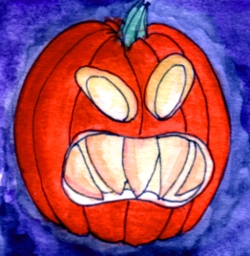
        Pumpkin3 © Angela Porter October 2010

        It’s Punky Night tonight
        It’s Punky Night tonight
        Give us a candle, give us a light
        It’s Punky Night tonight!

        This is one of the verses of a song changed by children as they carry their ‘punkies’, or Jack O’ Lanterns around villages in Somerset, England, UK and, in times past, begging for candles.  In the village of Hinton St George, Punky, or Punkie, Night is the last Thursday in October.

        Other variations on the verse include,

        It’s Punky Night tonight
        It’s Punky Night tonight
        Adam and Eve would not believe
        It’s Punky Night tonight!

        It’s Punky Night tonight
        It’s Punky Night tonight
        Give me a candle, give me a light

        If you don’t, you’ll get a fright!
        It’s Punky Night tonight

        It’s Punky Night tonight
        It’s Punky Night tonight
        Give me a candle, give me a light
        If you haven’t a candle, a penny’s alright

        It’s Punky Night Tonight!

        If you want to sing-a-long with the words, visit “The Punky Night Song” webpage!

        The threat of something not nice happening if a person didn’t give the children something compares to the more modern tradition of ‘trick or treat’.

        Punkies are made from a mangold-wurzel, or a large turnip, in a similar manner to modern Hallowe’en pumpkins.  The top is cut off, the insides scooped out and designs are cut into the outer skin, leaving a thin membrane intact.  Scary faces are common, but there are many examples of more creative designs.  A lighted candle is then placed inside to shine through the cuts.

        Despite the usual assumptions that this custom is an ancient one, there is little evidence of its existence before the C20th.  Various nights in late October served for this custom, but Hinton St George eventually settled on the last Thursday in October.  At one time, it seems to have been a simple house-visiting custom, but members of the local Women’s Institute reorganized it in the mid twentieth century.  It is now celebrated by a procession of children carrying their punkies, and a party where prizes for the best designs are given, a Punkie King and Punkie Queen are crowned and money is raised for charity.

        A local legend purports to explain the custom’s origin.  One version of the legend is that the village menfolk went to Chiselborough Fair, and got too drunk to find their way home.  Their wives fashioned lanterns out of mangold-wurzels and went to fetch them.   There are variations on the tale, in some the menfolk make the lanterns, in others the drunken menfolk are scared by the lanterns scary faces believing them to be ghosts of dead children returning to the Earth until Hallowe’en.  The neighbouring village of Lopen claims the custom (and legend) as their own, and other villages have started their own punkie nights.

        As a child, I remember helping to carve Jack O’ Lanterns from swedes.  Pumpkins were not a common item then.  It wasn’t easy work either, and my father usually took control of matters very quickly, at least by hollowing out the swede so that we could carve the designs into the shell more easily and with less likelihood of us cutting off our fingers, or worse!  The smell of cooking swede pervaded the house once the candle was lit; whenever I smell cooking swede I get get flashbacks to childhood Hallowe’en, before it became dominated by ‘trick or treat’ and the various forms of antisocial behaviour that occur on that night, and the surrounding nights.  We had our own Hallowe’en party in our home, with local friends visiting with us.  The living room was decorated with blood-red crepe paper streamers, home-made black bats and spiders and webs.  Candle light was the order of the evening.  We made ghoulish food that involved a lot of food dye!  Ducking apples, bobbing apples were always played. And the climax of the proceedings involved the  delivery and display of Captain Blood’s Cake, dripping with blood-coloured icing and ghastly green writing and a single candle placed in the middle of the cake.  This heralded the beginning of ghostly and ghoulish stories.  They would start with a tale about Captain Blood, and then would go onto other things as we children would exercise our imaginations to tell tales, add to the tale being told, and scaring ourselves with what we found most fearful.  It must be said there was a lot of laughing as well!  These were perhaps some of the best times of my childhood … even though I was most probably too shy to tell the tales, my imagination would run away with me and everyone would make fun of me, and I still bear those scars today, finding it hard to tell stories, write tales, be imaginative.  I’ll get over it though.  I will.

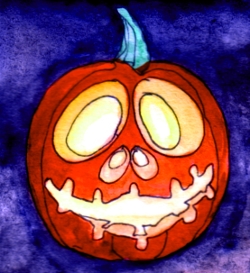
        The drawing of a pumpkin punkie was done using a very fine technical drawing pen (0.1mm) and watercolour paints on cartridge paper.  The sketch was completed very quickly, the painting took a little longer as the white purry-furry one wanted to help/hinder by demanding cuddles and fusses!   I then fiddled with it in GIMP2 to make it more vibrant in colour, more blurry and better looking than the original!  I have a couple more done that I’ll use to decorate any entries I do about Hallowe’en.

        1. Steve Roud, “The English Year”
        2. Punkie Night at information-britain.co.uk
        3. Punkie Night at Monstrous.com
        4. It’s Punky Night! at wyrdwords.vispa.com
        5. Ronald Hutton, “The Stations of the Sun”
        6. Punkie Night at wikipedia
        7. Jack o’ Lanterns at wikipedia
        8. Jacqueline Simpson and Steve Roud, “A Dictionary of English Folklore”

        Michaelmas

        Hiring, firing and pack rag days

        Today is the feast of St Michael the Archangel.  It is one of the four Quarter Days, important times in legal and economic matters from at least medieval times to the late C19th.  Today was a day for the payment of rents and the beginning or ending of hiring engagements.  As these contracts came to an end, many local families were busy packing their belongings and moving home on this day, and it became known as ‘Pack Rag Day’.  Also, local courts were often held on this day.

        Michaelmas Roast Goose

        It was also a day for feasting, traditionally on goose.  The goose had been fattened on the stubble fields.  Sometimes, these geese were presented by the tenant farmers to their landlords.  It was said that ‘if you eat goose on Michaelmas Day you will never lack money all year.

        Blackberries

        Blackberries were bad, or even poisonous, after this date.  The exact date varies from Michaelmas to the 10th or 11th October, depending on the area.  The latter dates equate to the 29th September before the change in calendar in 1752.

        The reason for the blackberries’ sudden decline was that the Devil interfered with them in some way on this date – putting his foot on them, wiping his tail or club on them, spitting on them, urinating or defecating upon them.

        Election of the Lord Mayor of London

        The Lord Mayor of London is the head of the Corporation of London, the authority that governs the City of London.  This is not to be confused with the Mayor of London, a post created in 2000 for the head of the Greater London Authority.  The Lord Mayor of London is a position that dates from around the year 1192.

        The Lord Mayor is elected on 29 September, presents himself to the Lord Chancellor at the House of Lords in October for royal approval, and finally takes office on the second Friday in November.

        The Lord Mayor is still an extremely important person in the nation, and in many situations is second only in precedence to the monarch.  As well as all the ceremonial duties, the Lord Mayor chairs the Court of Aldermen and the Court of Common Council and serves as Admiral of the Port of London, Chief Magistrate of the City and Chancellor of the City University.

        1. Steve Roud – The English Year
        2. Jacqueline Simpson and Steve Roud – A Dictionary of English Folklore

        Labels, work, stress and knits.

        Jam Jar Labels.

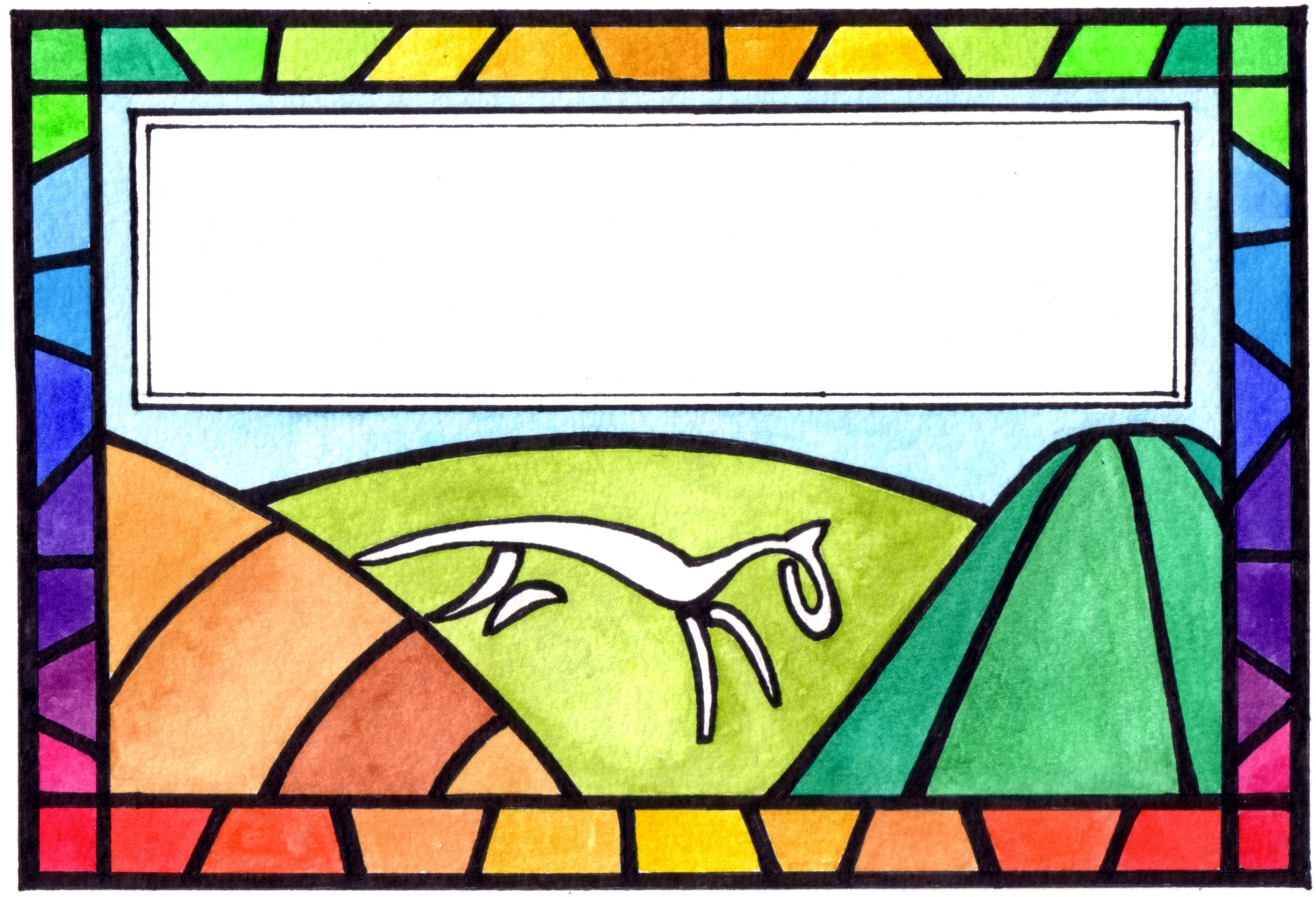
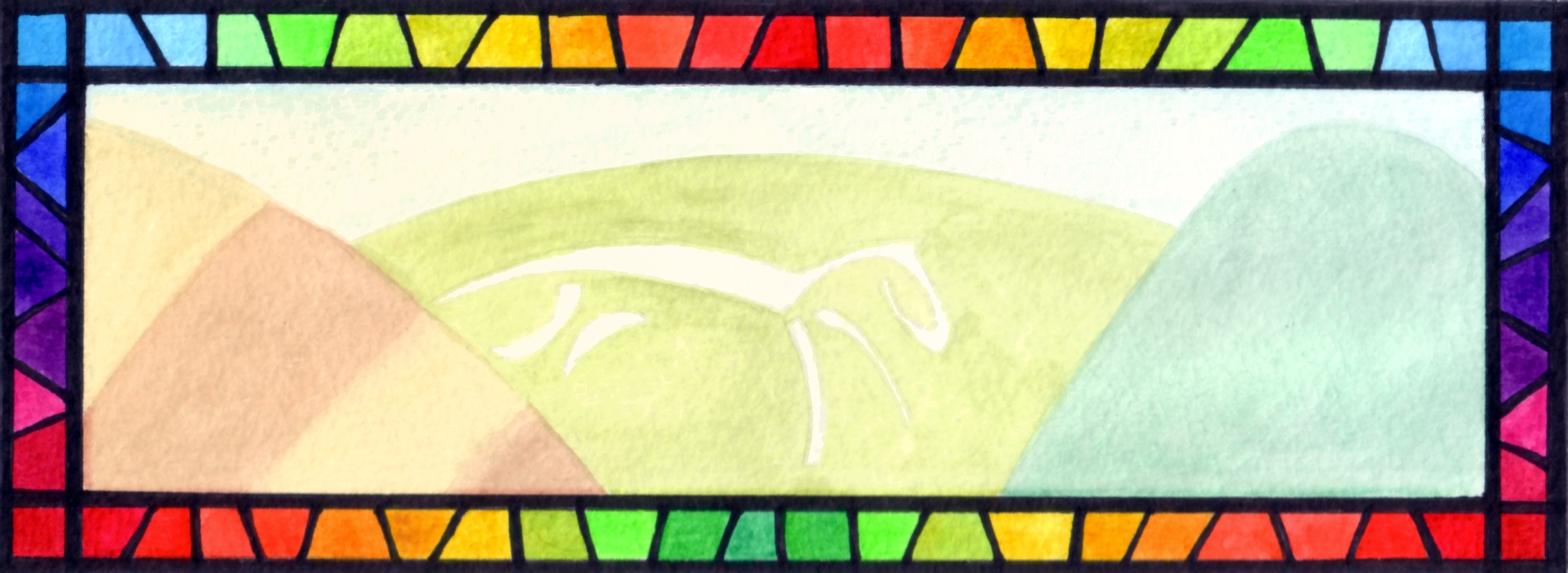
        I got some labels done for a friend for their home made jams and chutneys.  They are chuffed with them, and I’m pleased that they like.  They liked my illustration for my Harvest Moon blog entry, and wanted their labels in a similar style.   The first one below is for the larger jars, the second for he smaller jars.  It took a while to get the first one ‘fit for purpose’, but I’m really pleased with it.  It gives visual hints as to where the produce was grown and collected for the preserves.  I also am pleased that my rather simplified style of art has found a ‘niche’.  The smaller label works just fine too, similar design, but the landscape faded out so the information about the contents can be typed over it.

        A friend at work asked if I’d design some for a relative of hers as a Christmas present, as they are always making jams and preserves too.  So of course I’ll do that.

        Work, stress and knitting.

        Three weeks back at the chalkface (though no one uses chalk in the classroom anymore!) and the stresses of dealing with uncooperative, disrespectful teens and managing a workday that is like climbing on a treadmill that has been set by someone else who is calling the tune, and running to keep up with the changes in pace until eventually you are thrown off as your feet get in a tangle.  Well, that’s how it feels once more at the moment…despite the help I have once a week, I’m not yet able to break the cycle I’ve managed to get myself caught up in over a lifetime, and of course when things go wrong, or at least aren’t perfect, then I blame myself and beat myself up with it once again.  But it’s not as bad as it used to be, it just seems a long journey to get to where I’d like to be.  And one straw was added to the burden that’s built up since the return to work on Thursday that caused me to lose my temper briefly.  That led to me having a very upset digestive system for the rest of the day night, and a thumping headache that was with me most of Friday, Ibuprofen only just taking the edge off it.

        This lead me to feeling I needed to find an activity in the evenings that relaxed me, didn’t require a lot of concentration and that I could just pick up and put down at will.  I love art, but when I start on an art project I can get consumed by it, stay up later than is wise for me as I totally lose track of the time.  I wanted something that wouldn’t need my eyes to work in sharp focus (note to self – opticians!). Something that didn’t need a lot of concentration.  Something that kept my hands and eyes busy but left my mind free to think or to follow a film.  And that reminded me of why I used to love to knit and crochet so much.  I was doing something, something creative, but something that let me be still and calm, to just ‘be’.  I knew I needed projects that could be either finished quickly or were made up of smaller individual pieces which could be finished quickly.  Projects where I could utilise my own creativity, perhaps even learn about free-form work, and maybe even combine all of this with other forms of art that I love to do to create mixed media works or jewellery.   I wanted things I could do while too tired, too stressed out to settle to anything else.  Something that would help me settle when like this, and perhaps small enough that I could carry it with me.

        Well, in quite a synchronistic manner, one of those emails containing recommendations of books from Amazon appeared in my in-box, and on it were books of knitting and crochet.  I followed them, and added a large number of books to my large-ish Amazon wishlist, and I ordered two books that really caught my eye.

        One was the ‘Prayer Shawl Companion’ by Janet Bristow, which caught my attention because of the contemplative, spiritual aspect of knitting, and gathering together with other like minded souls to create to gift to others in need, to send out thoughts for healing, love, peace and help to where it is most needed.

        The other was ‘Mindful Knitting by Tara Jon Manning’ which appealed because it talks of the contemplative, meditative aspects of knitting.

        Both of these books are on their way to me, and I hope that they are what I hope them to be.  I may post pictures of the projects here.  And it may be that like-minded people may gather together with me to create to help others.  I don’t know…yet.

        I do know a friend at work has asked me to teach them to crochet.  So, after work on Thursday, I wandered through my local town to the only shop that now sells yarns, knitting needles and crochet hooks, to get some light coloured chunky wool, a large hook so she can see easily what to do, and can hold it more easily in her hands – she has rheumatoid arthritis, but she thinks this will help to exercise her hands and give her something creative to do.

        Of course, I have been knitting squares of various stitch patterns and using coloured yarns, all of a similar size, just to keep me occupied while I await the arrival of the books.  And hopefully the books will also inspire me to be confident in creating my own things.  I’m particularly intrigued by ‘free-form’ crochet, as I am with ‘free-form’ beading.  But, we shall see what comes of this.

        I do create textile jewellery from time to time – many examples can be seen at Artwyrd.deviantart.com, though I’ve not created any for a long while now, having a stock of them and nothing to do with them!  Finding the right market for them is a problem as they are so unique I suppose.  Maybe I can make use of my knitting/crochet skills to create different ways of wearing my beaded/wire/textile art … that’s something to think about at least!

        I did have an interesting time trawling through eBay looking at the knitting yarns available and seeing some rather exquisite, and expensive, examples.  And with some of them my mind went to making small, heartfelt gifts not to wear but to keep.  Something to do for Yuletide/Christmas gifts p’raps.  Now that’s a thought.  And it’s more or less time for me to start thinking about creating my Yule cards.  For a good few years now I’ve made my own cards for that time of year, and it does take quite a bit of time to create them!

        Autumn Equinox

        To Autumn  – William Blake

        O Autumn, laden with fruit, and stained
        With the blood of the grape, pass not, but sit
        Beneath my shady roof, there thou may’st rest,
        And tune thy jolly voice to my fresh pipe;
        And all the daughters of the year shall dance,
        Sing now the lusty song of fruits and flowers. 

        Some Equinox Thoughts

        At 04:09BST tomorrow morning, the Sun enters Libra and this event marks the Autumn Equinox, the start of Autumn in the Northern Hemisphere.  Equinox literally translates as ‘ equal night’, and the two equinoxes are the times in the year when the hours of light and dark are almost equally balanced – they may not be exactly the same length, but it’s the closest they get to being so!

        I always find the Equinoxes and Solstices charged with a buzz, with energy.  A great sense of change is in the air.  Autumn is always a time to harvest that which has ripened, to clear away the chaff and dead leaves.  In doing so the land and the trees have their underlying supportive structure laid bare.  And so it is with life, as it seems to me.  It’s a time to celebrate that which has come to fruition, a time to clear away that which has served its purpose or has not grown, time to reveal what lies beneath the surface for contemplation as the Sun’s strength begins to wane and the night lengthens into day.  Letting go of things is not easy, even when they are complete, but it is necessary to make way for the  new that is to come.  It is also important to take time to reflect on what has been gained, learned and lost as that too brings a harvest of its own, and it is important, I think, to give thanks for this harvest of personal work done and progress made along our own way.  It is also a time to think to the future, to set new goals now that the space in which they may achieved is apparent.

        Tomorrow, after a good nights sleep tonight, I will find time to sit in meditation and contemplate my personal harvest, what is complete, and my goals for the coming year, and to give thanks for all these things.