Apples and Brambles

I’ve chosen apples and brambles for today’s blog as they always seem to go together.  I noticed the blackberries on the brambles ripening during my jolly around the Valley Lines last week.  I’ve not been blackberrying in years and years, most probably not since I was a child.  I remember the abundance of blackberry pies, blackberry and apple crumbles, blackberry jam, apple jelly and frozen blackberries in our home.  With six children, there were plenty of us to gather them!  There were also the trips to collect whinberries (blueberries), as well as visits to ‘pick your own’ farms to harvest strawberries, raspberries and loganberries.

In later years, it would be my father who collected crab apples and blackberries to make his wines – along with sloes and young nettle leaves, young oak shoots, rosehips, rose petals, dandelions, and anything else he could brew.  I never appreciated his brews – all except the raspberry wine he made one year which was sweet and still tasted of the fruit – though others thought they were wonderful.  I do remember spending long hours writing out labels for his wine; I’ve always had nice handwriting and dabbled with calligraphy in the past too.  Now that’s something I’d forgotten about.

A few years ago a friend suggested, quite strongly, that I should collect sloes and make sloe gin, as well as to harvest the fruits of nature.  Well, I’ve not done so yet…

There are many recipes on tinternet and in books for blackberries, apples and so on, so I’ll not repost them.  Mind you, I could say the same about superstitions, myths, herbalism and the like, but I’m pulling together information for myself from many diverse sources, perhaps for future reference or just because I’m interested in it in the here and now, I don’t know.

Crab Apple (Pyrus malus)

(c)Angela Porter 1 Sept 2010The crab apple tree is native to Britain and is the wild ancestor of all the cultivated varieties of apple trees.  Apples of some sort were abundant before the Norman Conquest and were probably introduced into Britain by the Romans.  Twenty-two varieties of apples were mentioned by Pliny; there are now around two thousand cultivars.  In the Old Saxon manuscripts there are many mentions of apples and cider.

The Encyclopedia of Bartholomeus Anglicus, printed in Cologne around 1470, has a chapter on the apple:

Malus Appyll tree is a tree yt bereth apples and is a grete tree in itself…it is more short than other trees of the wood wyth knottes and rinelyd Rynde.  And makyth shadowe wythe thicke bowes and branches; and fayr with dyurs blossomes, and floures of swetnesse and lykynge,; with goode fruyte and noble.  And is gracious in syght and in taste and vertuous in medecyne…some beryth frute and harde, and some ryght soure and some ryght swete, with a good savoure and mery. [1].

The apple has been used as a symbol for sin, sexual seduction, beauty, love, sensuality, love between two men.  In art, Venus is often shown holding an apple as a symbol of love.    Apples also feature in many fairy tales, Snow White perhaps being the best known example where a poisoned apple puts Snow White into a deep sleep.

In the Old Testament of the Bible, it represents man’s fall; in the New Testament it represents man’s redemption from that fall.  The phrases ‘the apple of one’s eye’ and ‘a word fitly spoken is like apples of gold in settings of silver’ both come from the Bible.

The larynx in the human male is called the ‘Adam’s Apple’ because of the folk-tale about the Forbidden Fruit sticking in Adam’s throat and causing a bulge.

Heracles, the Greek hero, as part of his Twelve Labours had to travel to the Garden of the Hesperides.  His task there was to pick the golden apples growing on the Tree of Life that could be found at the centre of the garden.

Eris, the Greek goddess of discord, was disgruntled after she was excluded from the wedding of Peleus and Thetis.  To retaliate, she tossed a golden apple that was inscribed with ‘Kallisti’ – for the most beautiful one – into the wedding party.  Hera, Athene and Aphrodite, three of the goddesses attending the party, claimed the apple.  Paris of Troy was chosen to select the recipient of the apple.  After being bribed by both Hera and Athena, Aphrodite tempted him with the most beautiful woman in the world, Helen of Sparta.  He awarded the apple to Aphrodite and in doing so indirectly caused the Trojan War.

Another Greek myth concerns Atlanta who raced all her suitors in an attempt to avoid marriage.  She outran all but Hippomenes (also known as Melanion) who defeated her not by cunning but by speed.  Hippomenes knew he could not win in a fair race, so he used three golden apples, which were gifts from Aphrodite, the goddess of love, to distract Atlanta.  It took all three apples and all of his speed, but Hippomenes was successful, winning the race and Atlanta’s hand.

In Norse mythology, Iduna, the goddess of Spring and youth, nurtures an apple orchard in Asgard.  Every evening she would feed an apple to the gods and goddess in order to keep their youthfulness.

In Celtic mythology, Conle receives an apple which feeds him for a year, but alsogives him an irresistible desire for fairyland.

The mystical Isle of Avalon, the famed placed of eternal rest for Celtic heroes, including King Arthur, literally means ‘apple land’ or ‘apple island’.

Isaac Newton, according to popular legend, came up with the theory of universal gravitation after observing an apple falling from a tree.

Wassailing the orchard trees on Christmas Eve, or the Eve of the Epiphany, is still practiced in Britain.  Herrick mentioned it among his ‘Ceremonies of Christmas Eve’:

Wassaile the trees, that they may beare
You many a Plum and many a Peare:
For more or lesse fruits they will bring,
As you do give them Wassailing

The Wassailing ceremony consisted of the farmer, his family and labourers going out into the orchard after supper, bearing with them a jug of cider and hot cakes.  The latter were placed in the boughs of the oldest of best bearing trees in the orchard, while the cider was flung over the trees after the farmer had drunk their health in some such fashion as the following:

Here’s to thee, old apple-tree!
Whence thou may’st bud, and whence thou may’st blow.
Hats full!  Cap full!
Bushel – bushel bags full!
And my pockets full too! Huzzah!

The toast was repeated three times, the men and boys often firing off guns and pistols, the women and children shouting loudly.

Roasted apples were usually placed in the pitcher of cider and were thrown at the trees with the liquid.

A mixture of hot spiced ale, wine or cider with apples and bits of toast floating in it was known as ‘lamb’s wool’.  The name is derived from the Irish ‘la mas nbhal‘ meaning ‘the feast of the apple gathering’ (All Hallow’s Eve), which is pronounced something like ‘lammas-ool’ and this became corrupted into ‘lamb’s wool’.  Each person who drank the spicy beverage would also take out an apple, wish good luck to the company, and eat it.

It was believed that if an apple tree blossomed out of season then misfortune or death was foretold.

If the Sun shone through the branches of apple trees on Christmas Day, or Old Christmas Day, then there would be an abundant crop of apples.

Peel an apple so that the peel remains in one long strip.  Throw the strip over the shoulder to form the initial of a potential husband on the ground.  This is an activity that is performed particularly at Hallowe’en.

To indicate the direction of a lover’s home, flick an apple pip into the air while reciting  ‘North, south, east, west, tell me where my love does rest‘.

Children were warned that Awd Goggie and Lazy Lawrence were nursery bogies that protected orchards and unripe fruit.

The proverb ‘An apple a day keeps the doctor away’ seems to have been first recorded in the form ‘Eat an apple on going to bed and you’ll keep the doctor from earning his bread’.

Bramble or blackberry (Rubus fruticosus)

Blackberry (c)Angela Porter 31 Aug 2010The shoots of bramble have the ability to root where they touch the ground thus forming an arch.  Sufferers from boils, rheumatism and hernia were passed through the arch formed in this way.  Sometimes, a child suffering from whooping cough was passed under the arch seven times.  The cough was then thought to leave the child and stay within the bramble.

In the Highlands of Scotland, people used a length of bramble shoot entwined with ivy and rowan to ward off evil spirits.

Eating blackberries after the first frost was considered unlucky. In the UK, superstition says that blackberries should not be picked after Michaelmas (29 September), or the 10 October (Michaelmas by the old calendar).  It is said the devil has claimed them by urinating over them, spitting on them, stamping on them or wagged his tail over them and so leaving his mark on the leaves.  The link with Michaelmas is because this feast celebrates the battle when Archangel Michael drove Satan out of Heaven and hurled him down to Earth; perhaps the joke is that he landed in a bramble bush, but this is not clear.

Note to self…and other reflections

More art to do!  Yay!  Got some ideas … maybe … need to work on my more stylised, black-line and colour work …using acrylic inks or paints for the vibrancy of colour …

I’m so glad I started a blog, regardless of whether anyone reads it or not.  It’s given me a focus to both research, write and be inspired to create art.

If I’m honest I’ve been seriously lacking that focus and impetus for a long while thanks to my emotional state … I do tend towards depression, though I do my best to ameliorate it by engaging in activities that give me pleasure, but lately nothing much has done that … I’ve felt like I’ve been going through the motions, with no real purpose to them.  Not that everything needs a purpose, and doing something for the sake of the joy or contentment it brings is purpose enough.  However, I’ve been struggling with allowing myself to do pleasurable things, to feel the joy they bring … and perhaps the recognition of this this morning will help me move forward with my therapy, and in allowing myself to feel joy and pleasure.

As I look back at earlier entries, I can see how my approach is slowly evolving in terms of how I present information.  I’ll eventually work out a consistent ‘format’ that suits me in terms of colours of ‘quotes’, illustrations, references, hyperlinks.

  1. Botanical.com
  2. Apple symbolism on Wikipedia
  3. Roy Vickery – Plant-lore
  4. Bramble on HubPages
  5. Steve Roud – The Penguin Guide to the Superstitions of Britain and Ireland.
  6. Jacqueline Simpson and Steve Roud – A Dictionary of English Folklore.

Dew, dew or is it Duw, duw?

Morning dew and duw…

This blog title is a kind of a pun.  In Welsh, Duw means god.  The expression ‘duw duw’ is often used to mean ‘well I never’, ‘well,well’, or ‘dear me’, though it is often used in the place of a swear word.

After a chilly night, I woke to find the first dew of late summer covering the cars in the street.  As if any other reminder of the rapid approach of Autumn is needed.  I do love dew, the way droplets of it cling to spiders webs and sparkle in the early morning Sun like jewels; the way the wetness intensifies the dusty, dry colours of late Summer.

Dew and folklore

Dew gathered on St Bride’s Day (1st February) was considered to be particularly good for the complexion.  Bathing the face in dew early on May Day (1st May) Morning was excellent for the complexion, helping to whiten the skin and eradicate freckles. [1]

Samuel Pepys, on 28th May 1667, recorded the following in his diary:

After dinner my wife went down with Jane and W. Hewer to Woolwich in order to a little ayre, and to lie there tonight and so to gether May dew tomorrow morning, which Mrs. Turner hat taught her as the only thing in the world to wash her face with, and I am contented with it.

His wife obviously believed that any time in May would do.

May dew was also occasionally reported as generally medicinal, especially for weak limbs.  Also, some claimed that you could ‘make a wish’ while gathering it [1].

Some dewy weather proverbs [2, 4] are:

When dew is on the grass, rain will never come to pass.  When grass is dry at morning light, look for rain before the night.

If three nights dewless there be, ’twill rain you’re sure to see.

With dew before midnight, the next sure will be bright.

If you wet your feet with dew in the morning, you may keep them dry for the rest of the day.

Dew beliefs from Launceston, Cornwall include

…a swelling of the neck can be cured by going to the grave of the latest young person of the opposite sex before sunrise on the first of May (Beltane, ‘May Day’) and gathering the dew by passing the hand three times from the head to the foot of the grave.  The dew is then applied to the neck… A child weak in the back may be cured by drawing him over grass wet with morning dew on each of the mornings of May first, second and third. [3]

Herse was the Greek goddess of the plant-nourishing dew.  Her parents were Zeus and Selene [5].

  1. Steve Roud – The English Year
  2. Dew Folklore
  3. Gandolf.com
  4. The Old Farmers’ Almanac
  5. Theoi Greek Mythology

Arty thingies

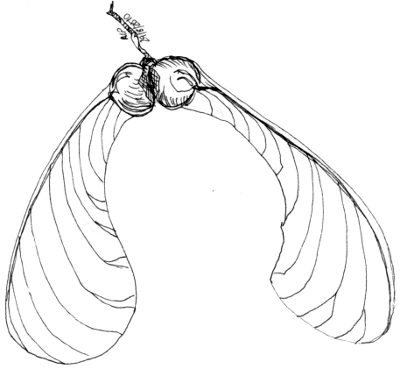
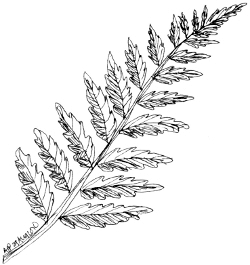
Well, the last day or three have been filled with arty pursuits, as well as looking into plantlore, folklore and superstition, to name but a couple of things.  It struck me that a good use of my skills would be to create the images to illustrate the plants I’m writing about.  And that would be a good thing as I spend far too long doing abstract and very stylised art!  Mind you, the first four illustrations of rosebay willowherb, ferns, beech and sycamore have been done very quickly.

I also finished another piece of abstract art, which can be seen here.  Some of the colours are a tad brighter or more ‘solid’ than I started out to do, but … it all kind of works.

Art certainly brings me a sense of contentment when I do it, and is a valuable coping activity when I’m not feeling bright and breezy, though I do go through periods where I totally lack inspiration …

Beech and Sycamore Plant-lore

A bit more trolling round the world weird web, as well as my reference books, for information on some of the plants I saw on my travels on Friday.  I get lost far too easily in the search for knowledge and information, but it’s always an enjoyable journey.

Beech (Fagus sylvatica)

Around the UK wishes can often be seen tied to beech trees.  This custom has it’s origins in Celtic tree mythology where the beech is known as the tree of wishes.  Fallen beech branches were seen as invitations to make a wish by writing it on a beech twig and then pushing the twig deep into the ground.  The wish would then be taken by the wishing fairies to the Fairy Queen who would consider it. [1] Rods of beech are often favoured by water diviners. [2]

The Greek deities Apollo and Athena were said to have sat, as vultures, in the branches of an oak or a beech tree to watch the war between the Trojans and the Greeks. [3, 4]

Beech nuts are known as mast [5].

Norse tradition says that tablets of beech were used to make the very first writing tablets for the runes.  It is also a sacred wood of the Summer Solstice [10].

Sycamore (Acer pseudoplatanus)

The Sycamore is also known as the Great Maple [5].  The winged seeds of the sycamore are called helicopters and were used in flying competitions by children.  The sycamore was the favoured wood for making love spoons in Wales, which are made from a single piece of wood [6].

In Montgomeryshire there was a belief that sycamore trees kept the fairies away and stopped them from spoiling the milk [7].

In Scotland the feudal lairds used sycamore tress, known as dool or joug trees, as their gallows.  Further south, in Wiltshire, sycamores had unlucky associations, perhaps because they were also sometimes known as ‘hanging trees’ [8].

The Sycamore is sometimes called the Martyrs’ tree after the Tolpuddle Martyrs who first met beneath a sycamore tree in 1843 and formed a secret society to fight starvation and poor wages.  Unfortunately, they were caught and sentenced to seven years transportation to Australia.  They were pardoned after two years and returned home [9].

  1. Tumbling Woods
  2. Oaken Woods
  3. Mystical World Wide Web
  4. messagenetcommresearch.com
  5. Botanical.com
  6. The Woodland Trust
  7. members.multimania.co.uk
  8. Roy Vickery – Plant Lore
  9. Forest of Leeds
  10. Spiritual Forums

Rosebay Willowherb and Fern Plant-lore

Rosebay Willowherb (Epilobium angustifolium)

The genus name of Epilobium comes from two Greek words: epi meaning upon and lobos meaning a pod which alludes to the fact that the flowers seem to sit upon the top of long, thin pod-like seed vessels that look rather like thick flower stems.  The name willowherb refers to the leaves which look rather like the leaves of the willow tree.

Rosebay willowherb was restricted in its habitat to clearings in woodland, until the advent of the railways.  The disturbance of the ground by the construction of the railways and the corridors of movement which they provided allowed the rosebay willowherb to spread far and wide

Rosebay willowherb, known as fireweed in the USA and greater willowherb in Canada, rapidly colonises burnt ground.  During the bombing of London during WWII, this plant often colonised derelict sites giving a much needed splash of colour during this grim time.  In the later months of summer it produces lots of pollen and nectar which bees turn into a rich, spicy honey.  It is the main food source for the caterpillar of the Elephant Hawk-moth.  In Russia it is used as a substitute for tea, and is called kaipor tea.  The leaves of rosebay willowherb can be fermented just as the leaves of tea can.

‘The willowherb will stop bleeding, heal wounds and drive away snakes, gnats and flies’ [1]

Picking the flower would mean your mother would die.[2]

Thunderstorms ensue from picking the flowers.[2]

Boys in the Thteford area used to smoke the fluffy down from the plant, but it was a very hot and strong smoke.[2]

Ferns

In Elizabethan times, fern seed was believed to be invisible, expect for a few moments around midnight on Midsummer Eve when it could be seen falling to the ground.  Anyone who could catch some in a pewter plate would be invisible while they carried it (the seed not the plate!). [2]  Shakespeare, in Henry IV, wrote ‘we have the receipt of fern seed, we walk invisible’.

In 19th century Lancashire, young people would go to Clough, near Moston, to silently gather the seeds of ‘St John’s Fern’ on the Eve of St John’s Day.  They would do this in order to gain the affections of those maidens who would not accept their attentions.  In Lincolnshire, St Mark’s Eve was called ‘the Devil’s Harvest’ because ferns were said to bud, blossom and release seed all between midnight and 1 a.m. and it would be the Devil that would harvest it.  If anyone managed to catch some of the seed between two pewter plates, then they would become as wise as the Devil. [2]

In the 17th century it was believed that the burning of bracken – either in the preparation of potash (used in the manufacture of glass or soap) or for its control – would lead to rain.  [3]

If you cut a fern stall horizontally you will see a significant letter, supposedly the initial of the person you will marry. A less common superstition, but one that was more serious, was the idea that the initial is always a ‘C’, signifying Christ, and for this reason witches are said to detest the plant. [2]

Another version is that the shape is a representation of an oak tree, the clearer the shape the better your luck will be [1].

The Druids classified ferns as sacred trees.  At Midsummer, uncurled fronds of Male Fern were gathered, dried and then carried as good-luck charms.  Fern leaves also have the reputation of preventing evil from entering one’s home.

  1. E Radford and M A Radford – Encyclopaedia of Superstitions 1949
  2. J Simpson and S Roud – A Dictionary of English Folklore
  3. R Vickery – Dictionary of Plant-Lore

Trains and seasonal stations

Riding the rails

Sir Nigel Gresley from http://www.copyright-free-photos.org.uk

Yesterday was a bit of a day.  I have a weekly morning appointment that often leaves me feeling very emotional.  I’ve been travelling there and back by train while I’ve been on holiday.  However, next week I return to work and the early morning train journeys will cease as I will have to get to work asap after my appointment.  I went to the Forum Coffee Lounge in Merthyr Tydfil for a pot of tea and some cake – I settled on a flapjack this week.  It has to be said, the Forum has the most gorgeous home-made cakes and traditional puddings, and they are very reasonably priced.

After enjoying the tea and nibble and recording my thoughts in my Luddite-journal,I decided to get a Day Ranger ticket,  and travel around South Wales.  The day was turning out to be a beautiful late summer day, the world lit with a soft golden light that presages Autumn so wonderfully.  I thought it would be nice to just to watch the world go by and for nothing more than the joy of moving from place to place, a chance to get my thoughts and emotions back into order, and to take a day out.  And so I did.  And it was lovely and relaxing.  I wish my train had been a steam train, like Sir Nigel Gresley, an A4 Pacific.  But the haulage by various diesel units was adequate and did the job of allowing me to relax.

I do find train travel relaxing.  I can’t run away from what I need to examine internally or work on creatively while travelling in such a way.  I have my journal with me, I write in it as I need to and work my way through things and find my balance once again.  Steam engines I love, but any locomotive will do in such circumstances.

Changing seasons

Rosebay Willowherb

The world is certainly moving towards Autumn in these here necks of the woods.  The quality of the light is changing, becoming more golden as the Sun’s strength wanes as we move further away from the Summer Solstice towards the Autumn Equinox.  There’s plenty of strength in the Sun to warm the Earth during the day, but the early mornings, late evenings and nights have that wonderful chill that heralds the coming of the magnificence of Autumn.

It really is my favourite time of year.  I adore the glowing warm colours and I start to eagerly look around me for signs of the changes, and yesterday I saw them.

The profusion of red haws on the hawthorn trees like seeds of the fire that will blaze soon.  There were the very occasional flash of  bright yellow leaves on the beech trees.  My ‘flame’ trees (some kind of maple or sycamore I think) were crowned with darker green leaves that had hints of a deep burgundy in them.  Ferns were beginning to turn yellow and then brown after being baked by the Summer Sun.  Fluffy seeds from rosebay willow herb.  Just hints, promises of the beauty of the colours yet to come.

The cycle of the seasons

I’ve always felt a close connection to the cycle of the seasons.  Without knowing why, I’ve always felt a deep ‘attachment’ to the solstices and equinoxes and have had an understanding of how they link to the cycles of human life and experience.

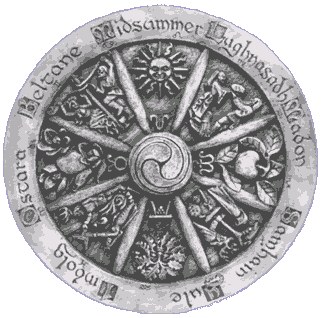
I have my own way of observing these astronomical (and astrological) stations of the year, ways that have developed over the past few years since I started to explore and find ways of expressing my spirituality and beliefs.  It has always seemed natural to me to acknowledge these stations of the year in some way.  As I’ve developed, so have my practices, sometimes I feel guilty about not spending as much time on them, having abbreviated them to the pure essence of what they are about, but I work hard on reminding myself that as we change, grow, develop, so must our practices and the way we do things.  When we learn something new, we do it with great attention to all the details, learning from this, but as our understanding and skill develops, we learn what is truly essential and leave out those parts that are superfluous to ourselves, our individuality.  Of course, they may be incorporated once again later if they are found to be required once again, but I do believe that by cutting away a lot of the faff and fluff you get to the core of the practice and the focus and intent is greater as a result.  The more in tune you are with the process, the less fuss is needed to make the connections that are needed.  But that’s me …simplicity wherever possible.

Art

26 August 2010

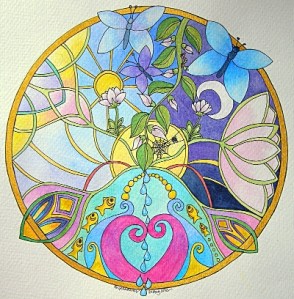
This is my latest piece of art.  A bigger version can be seen at Artwyrd.  It’s approx. 7″ in diameter, watercolour and Rotring Rapidograph pens on white cold pressed watercolour paper.

It’s quite simple in style, and I am musing about adding black lines to the butterflies’ wings.  But I’m not decided yet.  It reminds me of stained glass, and although there are elements that are not balanced, they are not meant to be either.

Echoes…

Why blog?…Why bother?

I just read a really good ‘blog entry’ – To Blog or Not to Blog’ by Skeltzer. Her words echo my thoughts …

And I write about all sorts of things. Some of my entries aren’t the best, but I’m not writing for anyone other than myself.

And I write about all sorts of things. Some of my entries aren’t the best, but I’m not writing for anyone other than myself. If people want to read and comment, that’s great.

So huge thanks to Skeltzer for her insights, and for helping the words surface for me about ‘Why blog?’.

I do love to write. I don’t often write to share with others. I have written some academic resources, and a children’s book about archaeology. But I really don’t write for other people to read, not unless I have a purpose. Perhaps by writing something that is public means that I get to practice the skills needed, and perhaps there may be some people out there who stumble across this little place and enjoy the words here, leave comments about my words, constructive comments especially, then that’s great.

It’s really interesting as I read through the comments left to the above blog-entry how many people seem to wonder ‘why’ or seek a kind of justification for their random, rambling blog. Modern life seems to insist that we have a ‘purpose’ to everything we do, and that just because we enjoy doing something isn’t justification enough. And isn’t that sad? In a life of hustle and bustle, it is becoming increasingly necessary to take time out to do something that gives us pleasure, just for us. And many of the replies to the blog echo that is the reason why they keep a blog – because they enjoy it. A totally valid reason in my opinion, especially if it gives motivation to express oneself, to be creative, something they may not do entirely for themselves in a personal journal.

I found the comment made by Ursula to be interesting.

People who write personal blogs should ask themselves why they have to “share” themselves with the rest of the web wide population. The purpose of blogging is to fulfill a basic human need: To be heard, to get feedback. Which is good. How else would I have had a chance to “meet” you?

Yes, it is nice to share, especially when there may not be other people around you who are willing to allow you to share, or who, for a myriad of other reasons, you are not comfortable to share with them. The world weird web allows for people to make connections, irrespective of physical distance, people who are willing to mutually share, and there is nothing wrong with that either.

Krysten commented the following concerning The Pioneer Woman:

She has a passion for life. She just wanted to share it with others and it has made her into something bigger than she expected.

And perhaps sharing that passion for life, to enthuse others, to inspire others to live life in a way that brings them great joy is another very good reason to blog.

I also like thorsaurus’ comment

Humans love telling stories. Every blog is a story…

And perhaps that is the comment that rings most true with me. In my ‘day job’ I find myself teaching in stories, communicating in stories. I do the same in the things I do outside of my ‘day job’ – I storytell during talks I give, I read stories at a preserved railway I’m a member of.

We all have a unique story to tell. Even though our lives may be incredibly similar, we experience it differently. And sharing that story to inspire others, to bond with strangers, to help others in similar circumstances, to make others laugh, to empathise, to sympathise.

This was contributed by Andrea:

I don’t have a lot of face-to-face conversation time in my life. I’m horrible at small talk, and just feel awkward (even with people I know sometimes!) Blogging is like a safer version of a face-to-face conversation for someone like me. But, it’s also way more available. Everyone’s too busy to hang out anymore, it seems. Through social media, I get that social connection with other human beings that I miss so much…

…Maybe we should stop analyzing this social media stuff and use it for whatever makes us happy (as long as it doesn’t hurt anyone).

That is also true … as is this from bagelonatree

Unless the blogger is selling something, it’s all about the connection and the joy of writing.

Lots of quotes from others there, and I hope that’s OK in blog-etiquette –

Thank You All

Thank you for writing the words that expressed my multiple feelings about starting a blog and for working my way through the conflicting feelings I have about it that can be summarised as ‘Why bother?’  The answers to this question are all given above.

Synchronicity

Synchronicity is the experience of two or more events that are apparently causally unrelated occuring together in a meaningful manner.

The musings about ‘Why blog?, above resulted from a synchronistic event.  I’ve been musing about ‘Why blog?  Why bother?’, and I randomly click on some title in a drop down menu to do with this WordPress interface and find a posting there exactly about that topic.

Synchronous occurrences are interesting, and many have happened recently, though they are all logged in my Luddite-journal!

WordPress

I love finding out how things work.  I do, really.  But finding my way around the WordPress Dashboard, settings, this visual or html place to type into … it’s all confusing at times…just so much to play with, to work out what it’s all about, and to use what needs to be used, and to keep consistency too.  I’m sure it will all work out.

Raining…daisies?

It’s started to rain steadily and quite heavily here. It’s also feeling rather chilly for an August day. The rain prompted me to look at folklore and superstitions mentioning rain. As I was sat at the ‘puter it was easier to go and do a Google than to go looking for my books on such topics.

There’s a good list of weather-lore at Down Gardening Services, and a lot more on the world weird web.

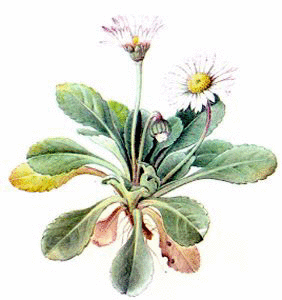
I like ‘The daisy shuts its eye before rain’ simply because I like daisies! I always think they look bright stars set in a green firmament. They always cheer one up!

The name daisy comes from the Old English ‘dæges eage‘ which means ‘day’s eye’ because the petals open at dawn and close at dusk (unless it’s about to rain!).   In Welsh they are called ‘Llygad y Dydd‘, which also means ‘eye of the day’.  It’s scientific name is Bellis perennis.

According to Roman mythology, Vertumnus, the guardian deity of orchards, pursued a young tree nymph named Belides after he saw her dancing with the other nymphs at the edge of the orchard.  Belides did not want his attention and so she asked the gods for help to escape Vertumnus.  As the powerful King of Argos was grandfather to Belides, the gods agreed to help.  They transformed her into a tiny flower called Bellis, and so she escaped a terrible fate.

The Celts had a legend that daisies were the spirits of babies who had died during birth. The daisies grew to help relieve their parents’ grief with their simple beauty and innocence.

Making daisy chains was a childhood activity enjoyed by many of us. I wonder how many of us knew at those tender ages that parents used to put daisy chains around children’s necks to prevent them being stolen by fairies. Apparently, daisy chains should always have their ends joined so that they form a circle that represents the Sun, the Earth and the cycle of life.

Plucking the petals from a daisy, one by one, and reciting ‘s/he loves me, s/he loves me not’ is a common divinatory superstition. Placing the root of a daisy under one’s pillow is said to produce a dream or a vision of one’s future love/partner.

The symbolic and legendary meanings of flowers dates back to Elizabethan times, however it was the Victorians who assigned simple messages to flowers. It was a period in time when social etiquette meant that men and ladies could not express their feelings openly and so the use of the colour and type of flower to express what they could not say or show became popular. The daisy was associated with simplicity and modesty. The message of the daisies in the language of flowers is that of gentleness, innocence and purity in both the giver and receiver.

Morning musings…morning meanderings

What is this blog about?

I’ve just been doing a bit of Luddite-style journalling – pen and paper that is! And I was musing about why on Earth I’d want to blog when I keep a journal, and this perhaps seems as a doubling up of work.

However, much of my Luddite-journal is very personal and I’d not share with anyone, no matter how close they are to me, and no-one will have access to them until I “have shuffled off this mortal coil”.

I suppose that this blog is a vehicle for me to share with anyone who wishes to read about my fairly random thoughts, research, insights, questions, perhaps even little stories, poems and some of my arty-crafty stuff. In other words things I’d like to share with others, but don’t really have the opportunities to do in my ‘real life’, and I think the relative anonymity the blog affords me may allow me to do so.

Like so many, there are parts of my life that are kept fairly separate, for instance my ‘day job’ and my spirituality and spiritual practices. My spirituality is with me always, but I can’t talk about it, my practices, or express it openly in my job, with those I work with, although I do get away with meditation during my working day when I begin to feel stressed or upset! The people I interact with spirituality are good souls (mostly), but generally have a fairly narrow spiritual view, and I tend to be a searcher looking for more, trying things from different traditions, working out what sits well with me, what works for me, what helps me find words for what I instinctively feel inside of me, finding ways to express to express this inner knowledge and understanding, changing and adapting things, melding and moulding them into something that is uniquely me. I do not, and would never, profess to be an expert, to have the one right answer, I’m just a seeker looking for what is right for me.

Along my way some of my musings, discoveries, thoughts, practices may help others also seeking their way, whether they agree or disagree with what I may write. Indeed, it is often through a disagreement that you can arrive at a better understanding of what is right for you. I sometimes think you can only find out who you truly are by finding out what it is that you are not (and that may be what others have told you to suit their own conscious or unconscious purposes/needs).

Spirituality is just one thing it’s difficult for me to share with others. I find the same is true of my art (to a much lesser degree), writing (about the same degree), and my interests in so many things, including folklore, folk-medicine (ethnopharmacology or ethnobotany), archaeology, history, etymology, self-help, counselling, forensic psychology, cookery, nature, astrology, astronomy…and that’s just a few things!

I’m very much a ‘random’ and sporadic researcher/reader/student of all the things I’m interested in. The cycles of interest wax and wane randomly, depending on whether something has sparked an interest in me. I tend to dive into that interest wholeheartedly for a while – a few weeks or months – and as my interest is beginning to feel quite sated, some other spark comes along and re-ignites another flame of passion and so off I go.

It must be frustrating for those who know me, who must think I’m quite shallow in my interests and passions as I seemingly flit from one thing to another.  I know I’ve often questioned how serious I am and how deeply I get into things, but I know I dig as deeply as I need to into whatever is my current passion (or passions), and that interest/passion never entirely departs, it just becomes somnolent for a while…until I’m ready to continue digging deeper!

A dear friend of mine always said he was determined to turn me into a polymath (see Dictionary.reference.com or Wikipedia) Much more difficult to do in this day and age of so much information and knowledge. Polymaths were far more common in the past – Isaac Newton for instance. I think it’s quite clear, if my prior ramblings in this entry are clear, that I love to learn! If I didn’t have to work to pay the bills and keep a roof above my head (and keep my pusscat in Purina food!) and could afford it I’d be a perpetual student! As it is, I read, I browse the world weird web (with that sack of salt by my side!), listen to others, and soak it all up, processing it in my own internal way.

A cute tale about me being a sponge for knowledge is of a young person I worked with. They were discussing with another person what they’d like to do for a career and asked if they knew what qualifications they’d need. The person listening said that she didn’t know. The young person then suggested ‘Let’s go and ask …, she is the internet after all!’. Praise, maybe, though I would never, ever claim to be such a thing!

I can be a ‘mistress of the art of the Google’ when others fail to find what they wish while trolling around the weird wide web. So, perhaps another use of this blog will be to keep a record of my wanderings as I come across things of interest, or otherwise, in a way my Luddite-journal doesn’t! No doubt a series of wanderings that are unique to me.

It may turn out interesting to see how this blog evolves and develops.

Morning meanderings

I love alliteration – you have been warned!

Anyway, my morning meanderings through the world weird web included a search for moon-phase information to go into my Luddite-Journal, and that led me to an Astrological Diary that I will almost certainly be purchasing to use next year. My only whinge about diaries is that they rarely have a full year planner for the next year, and as one of my evening activities involves taking bookings at year in advance then I really need it! I guess I’ll just have to go looking for something I can stick in the back of the diary to accommodate my needs.

I did find a moon phase table for 2010 that suited my purpose (without me having to type it all out from my ephemeris!) and it’s a shame I couldn’t find one for 2011 at the same website. However, the search did lead me to the diary I found, and will be ordered very soon!

I do have an interest in astrology – but not your newspaper astrology, the ‘proper’ stuff. I’ve found my natal chart and the analysis of it to be most helpful in understanding myself and helping to heal myself from the wounds of the past, and much more than that. When done properly it can really help to understand what is going on in an individual’s life at any time. It is my experience that it can be incredibly specific, detailed and helpful, but only when done well. It’s not something I rely on and live my life by, but I do find it interesting to study. Perhaps it’s because science pooh-poohs it that I find it so fascinating – I can be terribly rebellious in such cases! I may be a scientist by education, but … it just fascinates me! And it is something I feel I ‘should’ spend more time on, but when I start I get so engrossed that nothing else gets done…